Multimedia Research Project
Assignment #6: Team work in Visual Media Methods
#1
A Multimedia Research Project
The Researcher / Writer: KATO Raisa
The Visual Producer (Photo/Video): IMAI Haruka
The AI & Media Editor: TOKUHIRO Akari
The Warrior of Cleanliness: Cleaning Staff
They keep our surroundings clean daily. Every morning when I arrive at Meiji Gakuin University, the cleaning staff are already hard at work. They do a lot of work to keep the campus clean, such as raking leaves, cleaning restrooms, and collecting trash. We interviewed two cleaning staff about their jobs and themselves.
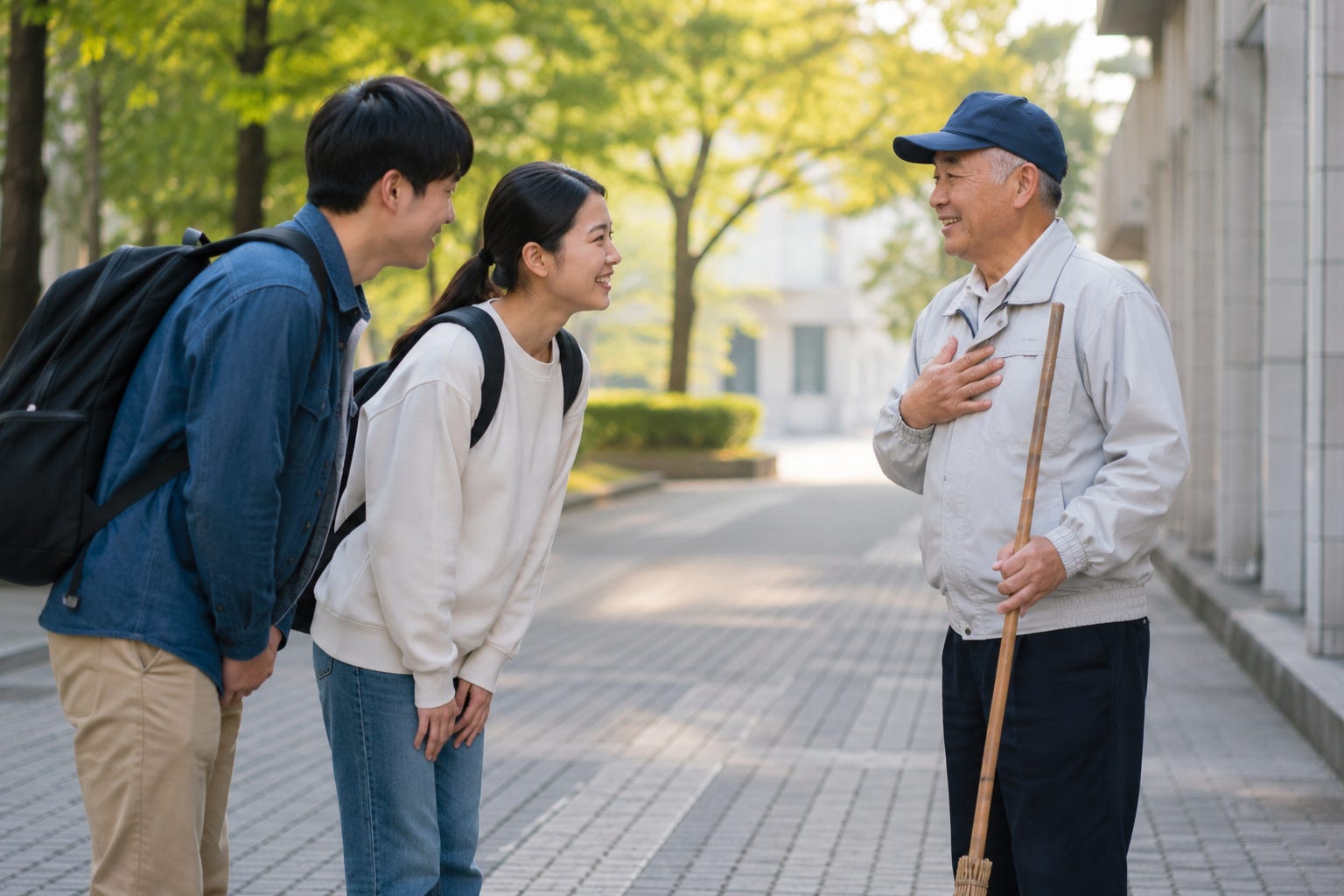


The first interviewee was a male cleaner in his 60s who has worked at the university for four years. His decision to work at the university was mainly due to its convenient location, as it is only a 10 to 15 minute commute from his home by car. He began working at the university after turning sixty because job opportunities became limited at his age. He explained that one of his motivations is maintaining a high standard of cleanliness. Although cleaning staff are often overlooked and viewed as being in a lower position. He mentioned that he takes pride in his work and believes that clear cleaning standards are important for ensuring quality. Also, he is not satisfied with the low wages and felt that cleaning staff do not receive praise to their work. He also mentioned that this cleaning staff have been transferred into machine recently. However, machines alone cannot determine whether an area is truly clean, so in that perspective, cleaning staff could praise more as well. Finally, we asked him about is there any message toward Meiji Gakuin University students or his job. He had message to students to dispose of waste properly, particularly cigarette butts, and to follow waste separation rules.
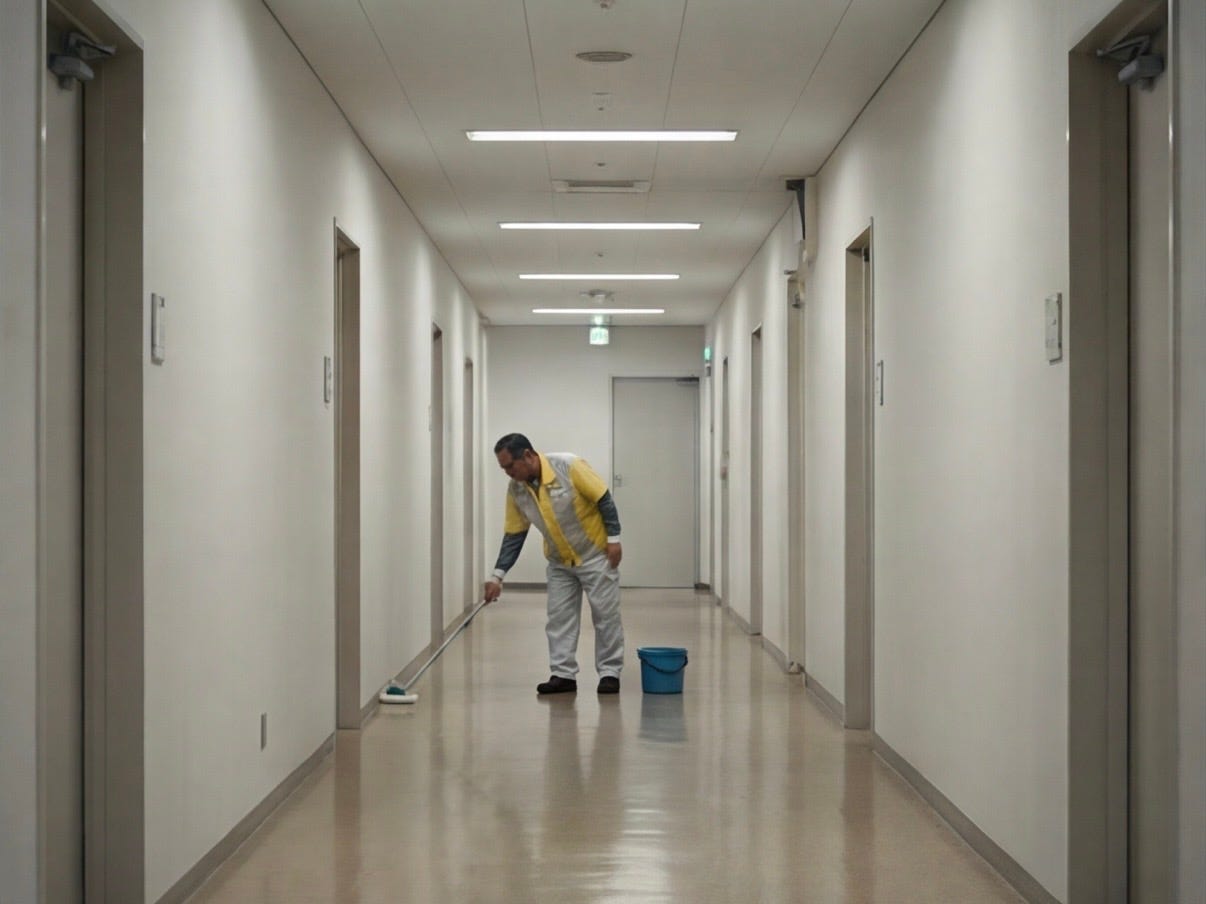


The second interviewee was a male 54 year old male cleaner who had been working at the university from this year, just three months. He explained that one of the most difficult aspects of the job is managing a very large cleaning area. He does not aware of exact number of how many people have been working for cleaning staff, but he told us that there are probably around 30 people working in Meiji Gakuin University as cleaning staff. Also, dealing with fallen leaves and branches from the many trees on campus seem to be difficult as well. Especially after strong wind or rainy day make it difficult to clean up the fallen leaves. When we interviewed about what is motivation for work, he answer that he does not have any motivation. He is in the step that still learning the job and he working flat out to complete the tasks assigned. Before joining the university, he worked in the cleaning industry, which influenced his decision to continue in the same field. Like the first interviewee, he also chose this university because it is close to his home which he only took 20 minutes to commute it. He noted that one of the biggest frustrations of the job is finding cigarette butts, cans, and other garbage discarded improperly. Finally, he had message to encourage students to greet others politely as basic social responsibilities.
Overall, through these two interviews, our group recognize that cleaning staff have working very hard to maintain cleanliness of university. However, both of them mentioned that their working condition is harsh, and garbage discarded improperly makes them frustrated. This highlights how interviewee’s environment should be improved and how respectful job is this. Cleaning staff’s effort may not unnoticed to most of people, but they are essential to university life.
VMM team project
(2026, June 2nd)
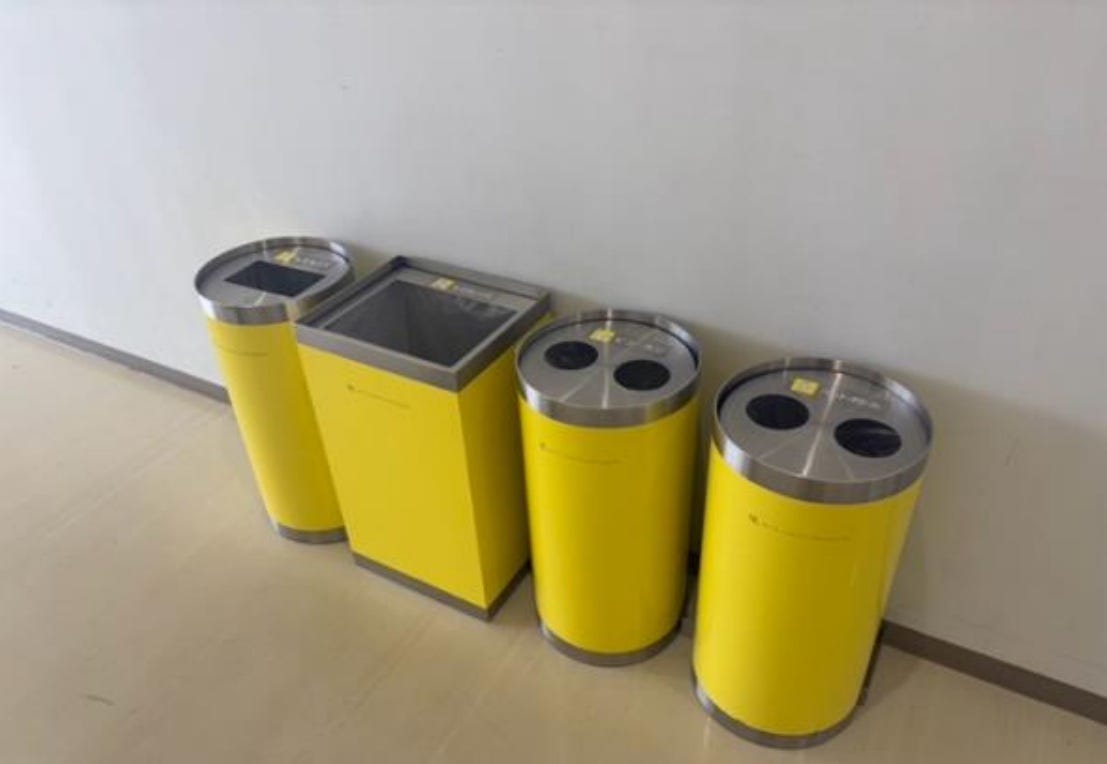
Caption:
Recycling bins have been installed on campus. By sorting waste into categories such as burnable trash, glass and metal cans, and plastic bottles, the university is promoting waste reduction and resource recycling.
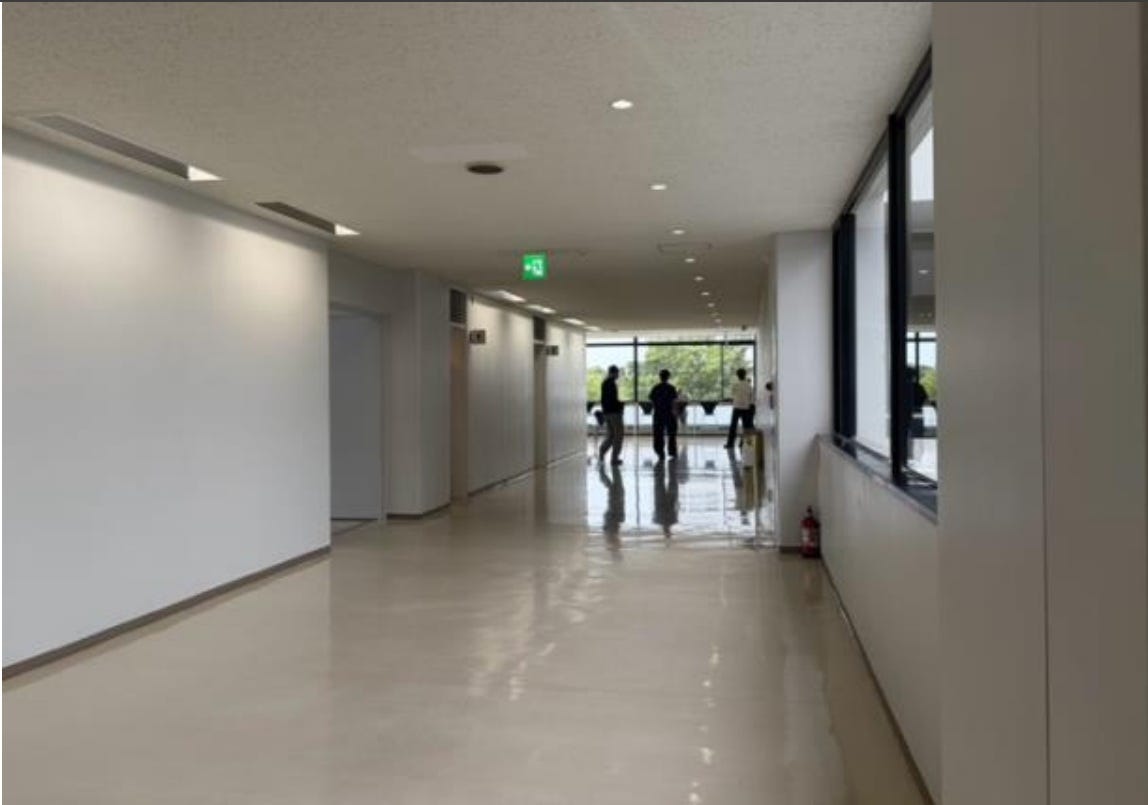
Caption:
the hallway on campus.
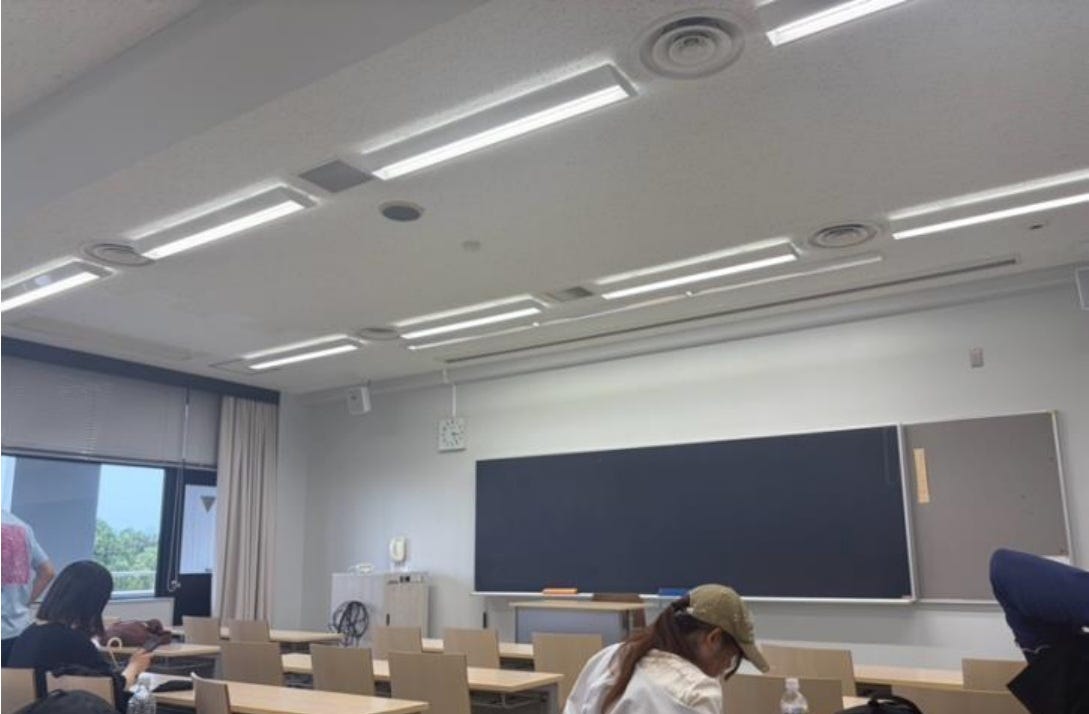
Caption:
The classroom before class
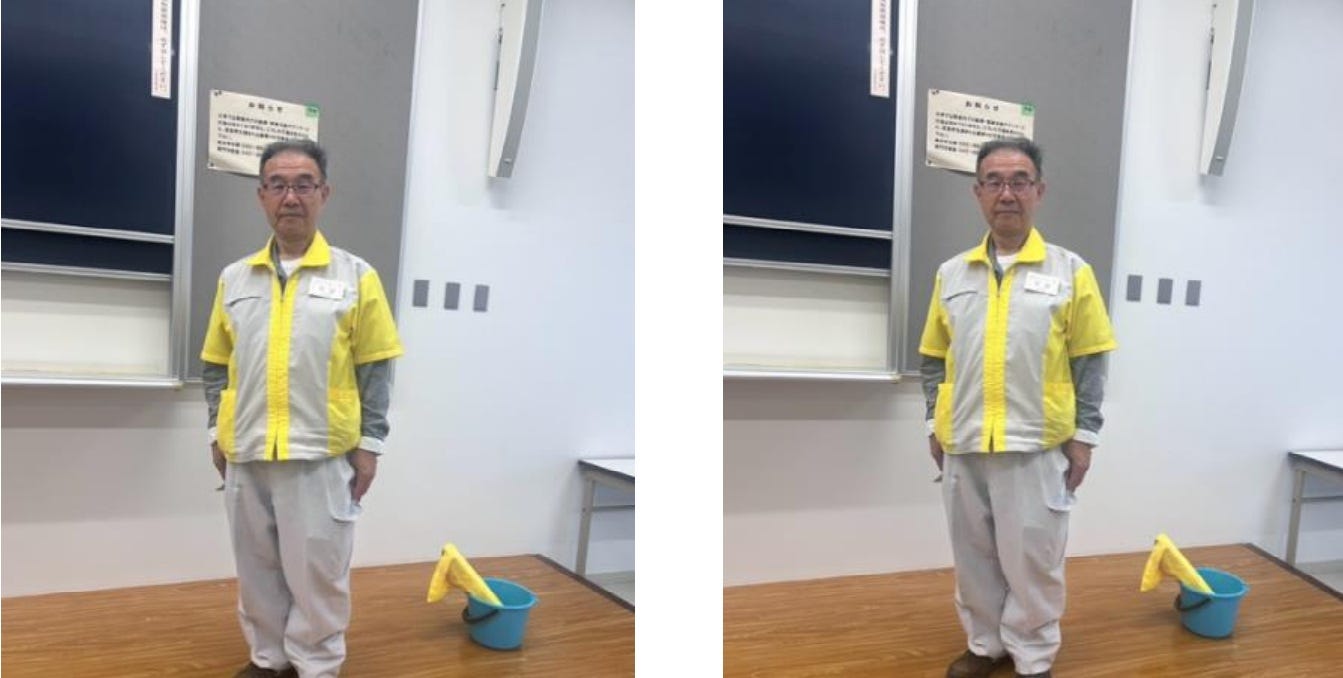
Caption:
A male cleaning staff member in his 60s whom I interviewed
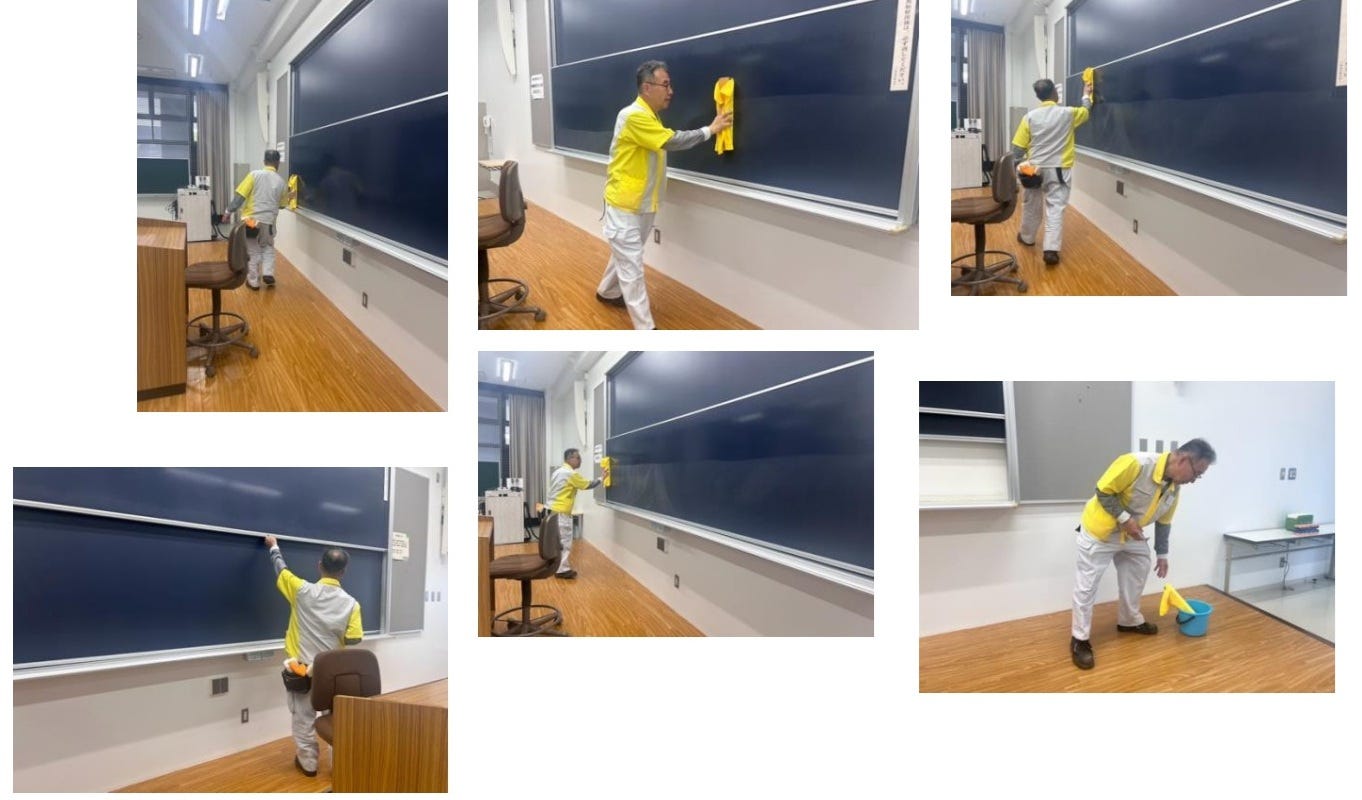
Caption:
A scene of someone cleaning the blackboard in the large lecture hall in Building 6. They were wiping it down by wrapping a rag around an eraser.
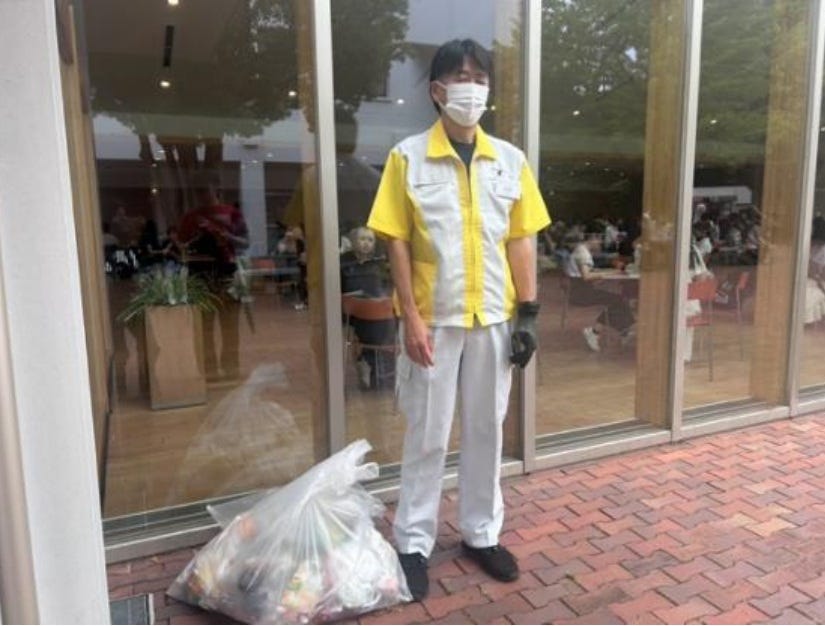
Caption:
A male cleaning staff member in his 50s whom I interviewed. He was collecting trash at the Clara Lounge
#2
The Researcher: 22kc1511 Liang Yuting
The Visual Producer: 24kc1050 Wu Haozhe
The AI & Media Editor:24kc1505 Liu Heyao
June 6, 2026
A Day in the Life of a Karaoke Employee in Japan
Working in the service industry can be a valuable experience for international students and immigrants in Japan. For this project, we interviewed a Chinese employee who works at a karaoke shop in Shinjuku, Tokyo.
The interviewee came to Japan in April 2019. Before moving to Japan, he had already worked in the entertainment industry in China. Because he enjoyed this type of work, he decided to continue working in the karaoke industry after arriving in Japan.
His main responsibility is serving customers and welcoming guests. During a normal shift, he helps customers check in, answers questions, and makes sure that guests have a comfortable experience. Besides customer service, employees also need to keep the karaoke rooms clean and organized.
The photographs show many parts of his daily work. Some pictures show him cleaning tables and picking up trash after customers leave. Other photos show him mopping the floor and preparing rooms for the next group of guests. Cleanliness is an important part of the job because customers expect a comfortable and pleasant environment.
Another part of his work involves managing records and handling basic administrative tasks at the front desk. He must communicate with customers, keep track of reservations, and help the business operate smoothly.
According to the interviewee, there is not a significant difference between karaoke businesses in Japan and China. He believes that the basic services and customer needs are quite similar. Most customers at his workplace are Chinese people living in Japan, although foreign customers from other countries also visit occasionally.
When asked about memorable experiences, he mentioned that some customers drink too much alcohol and sometimes cause trouble. Situations like these require employees to stay calm and handle problems professionally.
Interestingly, the interviewee said that he does not feel strong pressure in this job. Instead, he believes the work has helped him learn many useful skills. By meeting different kinds of customers, he has gained communication experience and learned how to work with people from different backgrounds.
The AI-generated images in this project were used to fill visual gaps and represent the atmosphere of the workplace. They help illustrate the professional image of the employee and the modern entertainment environment in which he works.
Overall, this interview provided us with a better understanding of the daily responsibilities of a karaoke employee in Japan. Although the work may seem simple, it requires responsibility, customer service skills, and attention to detail. The experience has helped the interviewee develop valuable skills while living and working in Japan, and it has also allowed us to learn more about the realities of working in Japan’s service industry.
Photo
Photo 1
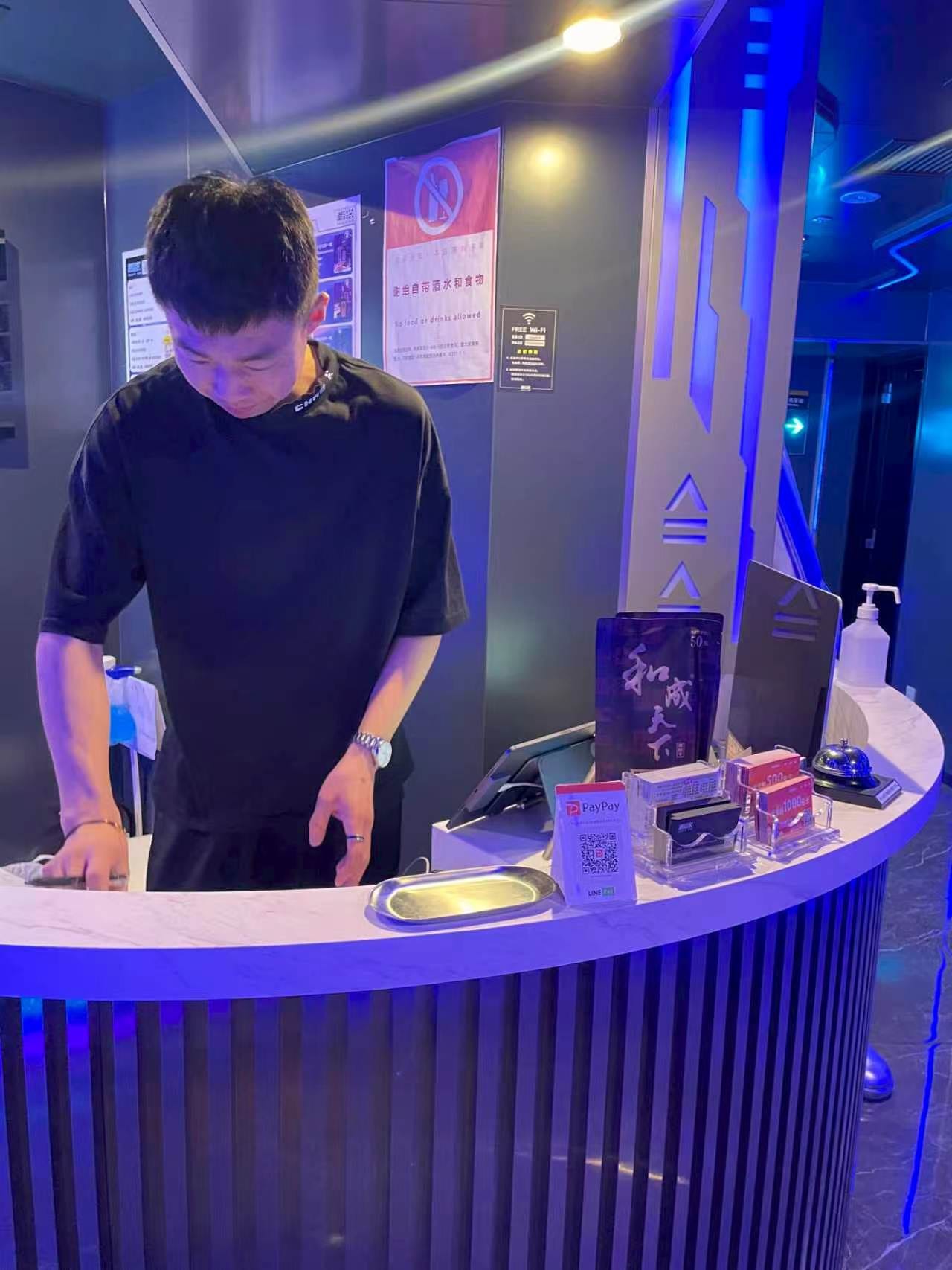
The interviewee at the front desk of the karaoke shop.
Photo 2
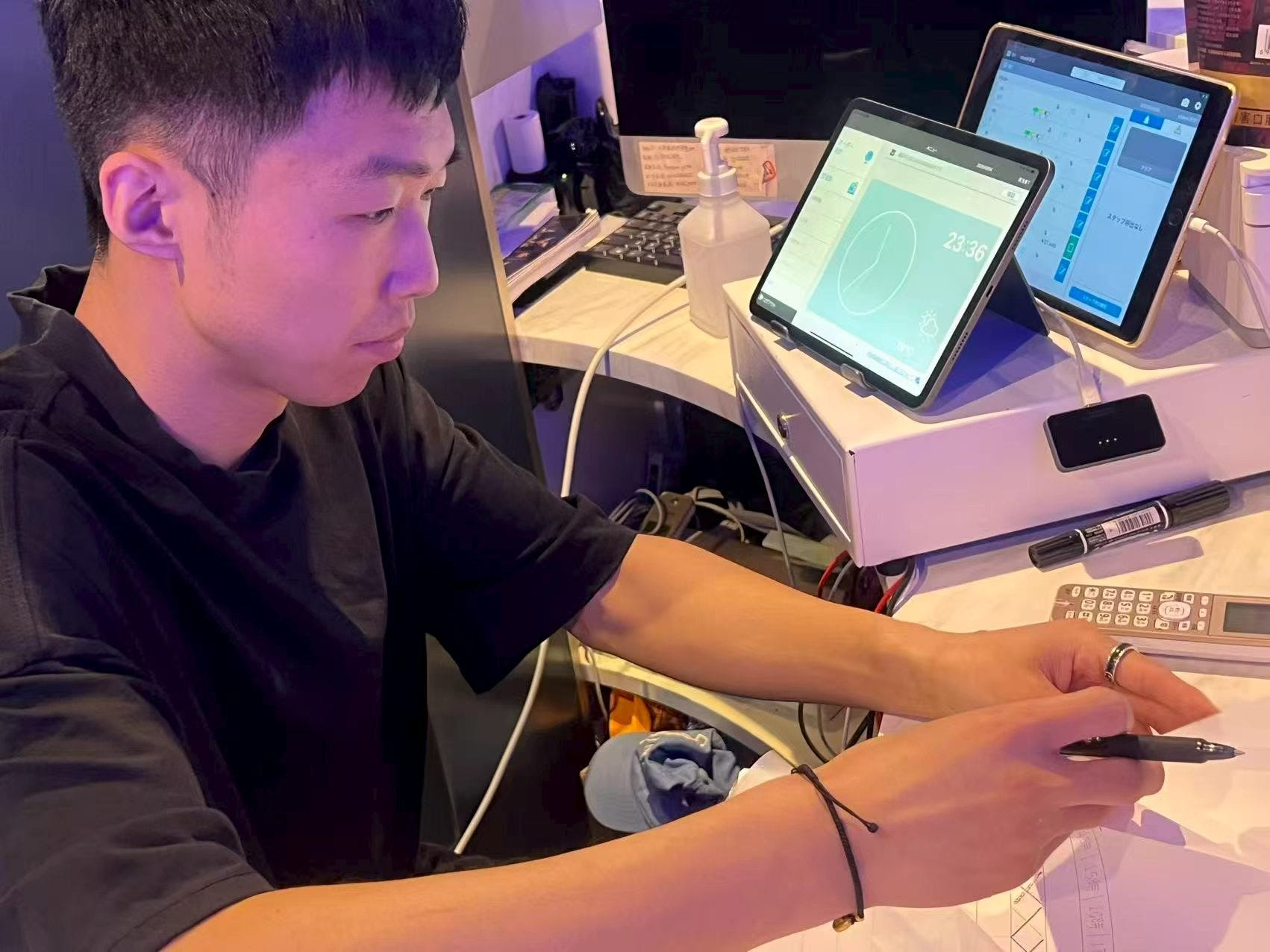
Helping manage customer service and reservations.
Photo 3
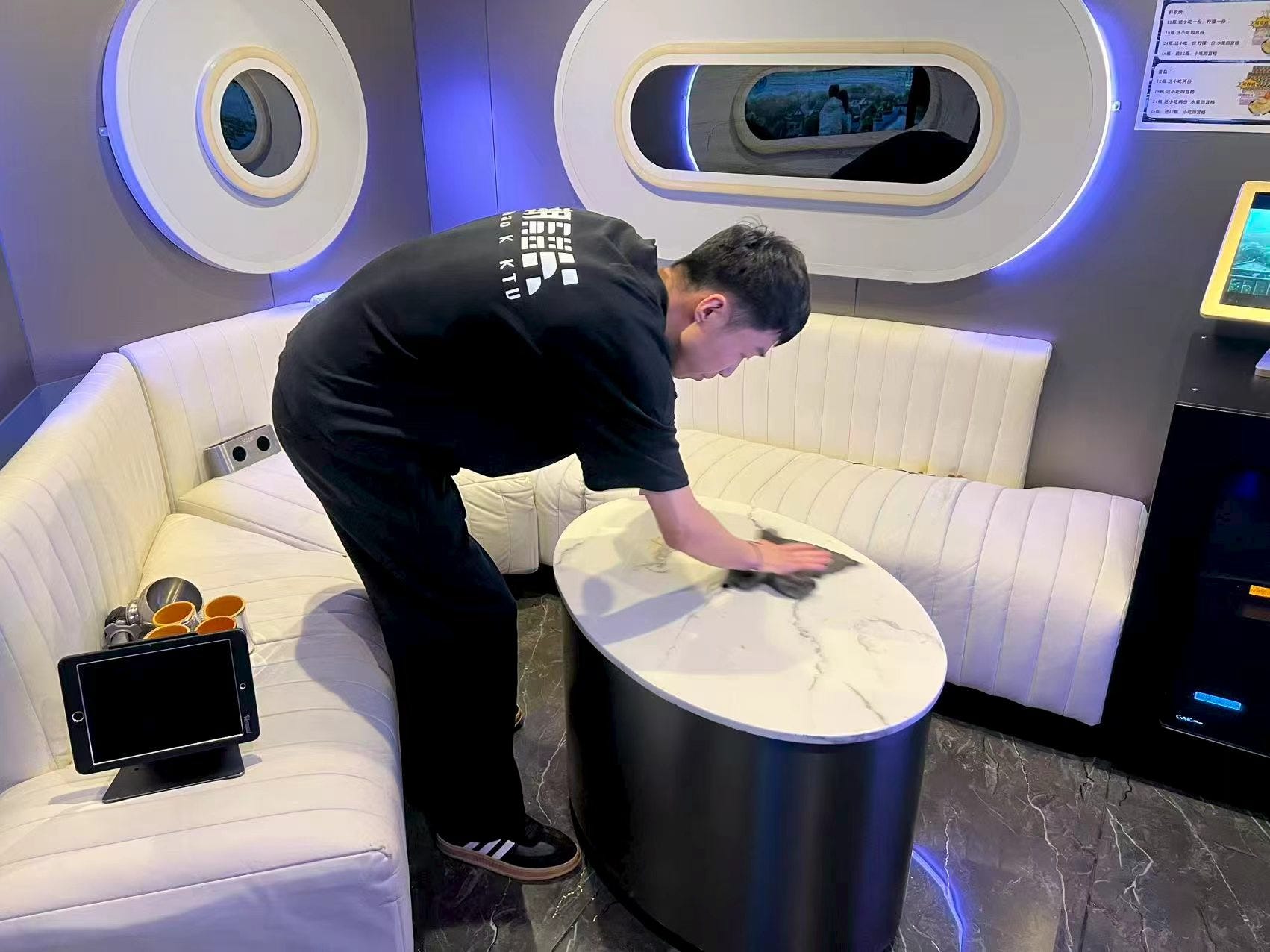
Cleaning a karaoke room after customers leave.
Photo 4
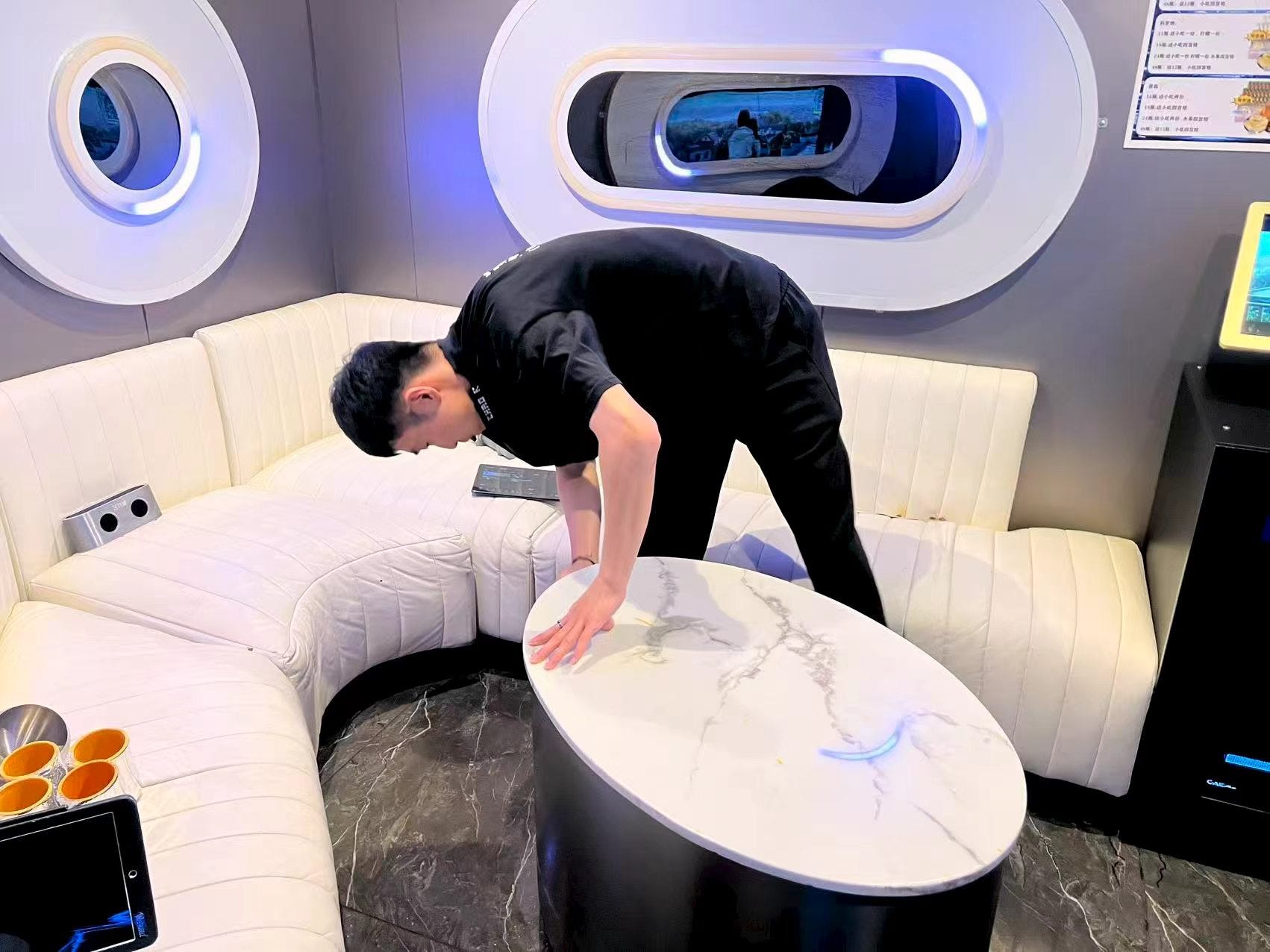
Preparing tables for the next guests.
Photo 5
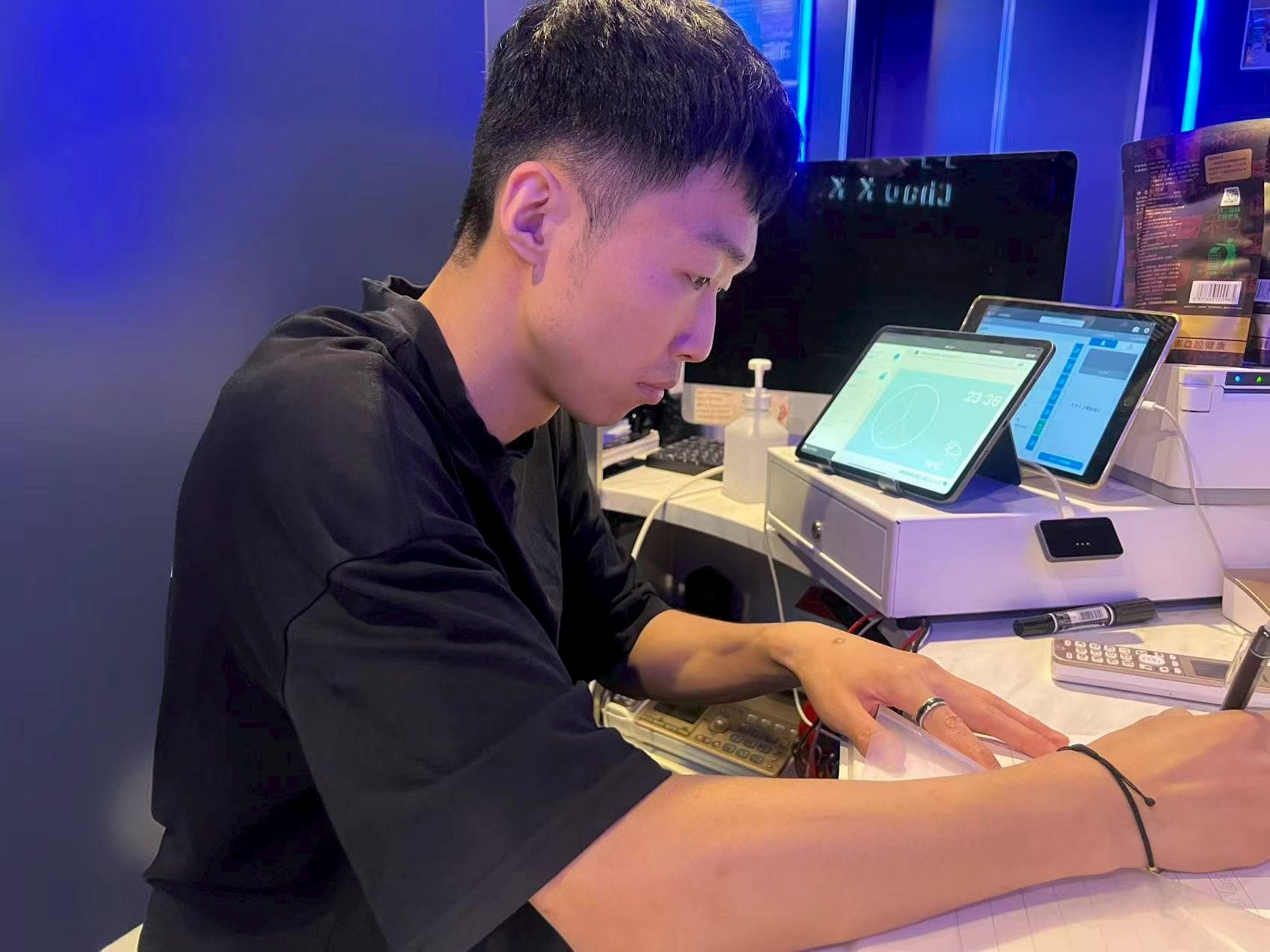
Recording information and completing daily tasks.
Photo 6
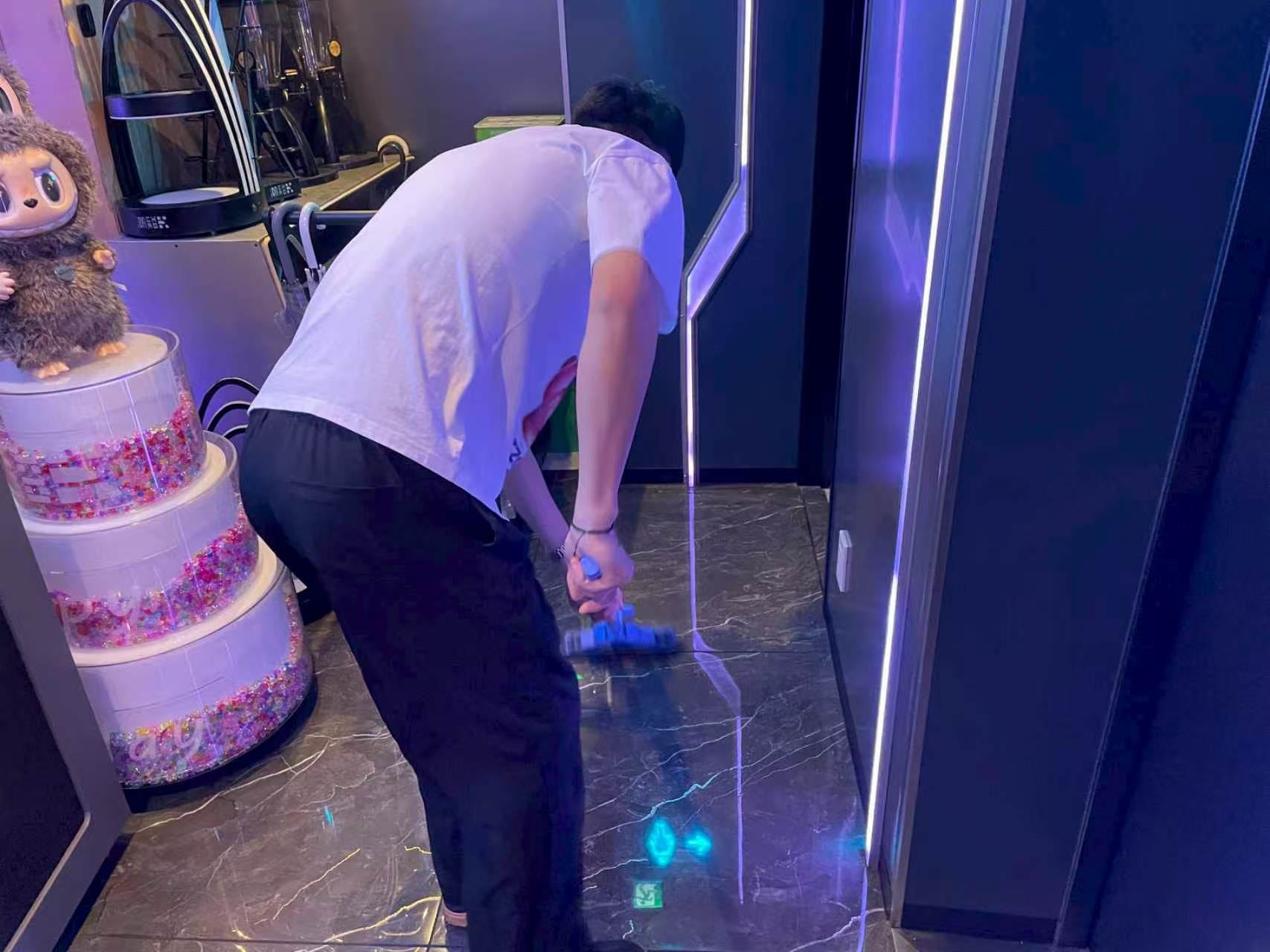
Maintaining a clean and comfortable environment.
AI Caption
Image 1
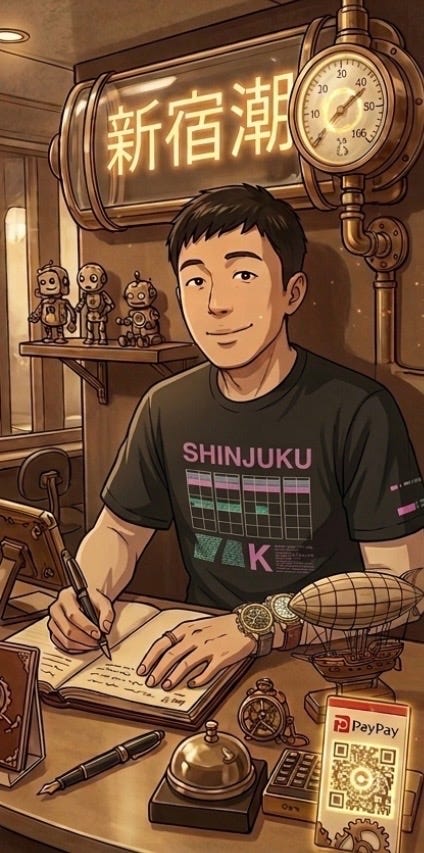
An AI-generated portrait representing the interviewee’s professional identity.
Image 2

An AI-generated image showing reflection on career and future goals.
Image 3
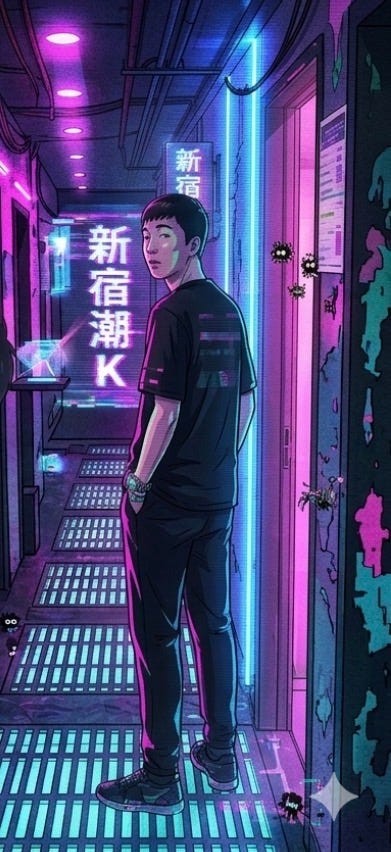
An AI-generated image illustrating the atmosphere of a modern karaoke workplace.
#3
A Multimedia Research Project
by UEMATSU Chihiro, TSUKADA Mei, CHUNG Cheuk Hei
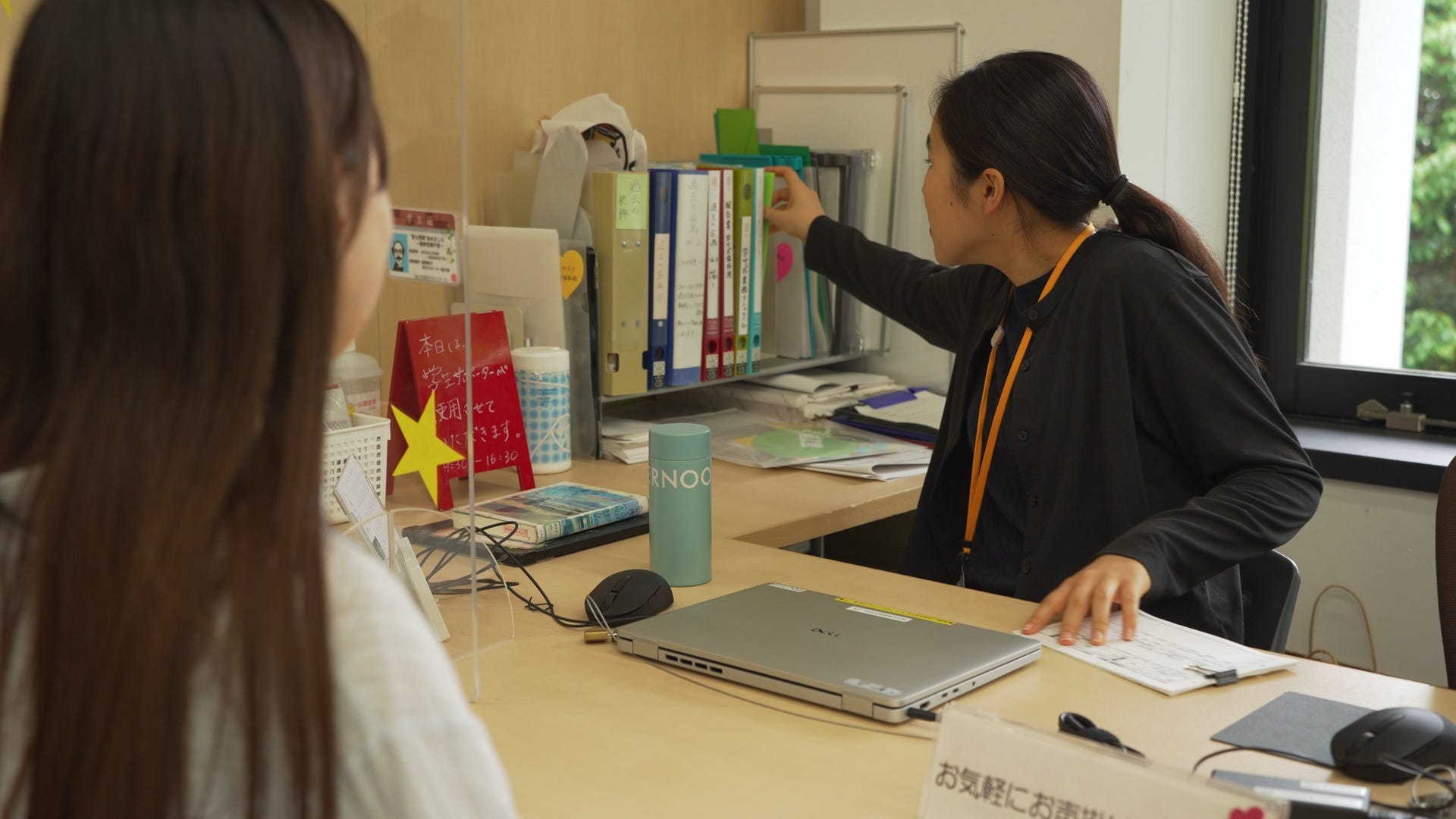
On June 5, we went to the Meiji Gakuin University Library to interview student supporters. Student supporters are Meiji Gakuin students who work in the library as assistants.
We got an appointment one week ago. According to one of the staff members, no one is usually allowed to take photos or videos in the library; however, they decided to cooperate for our assignment.
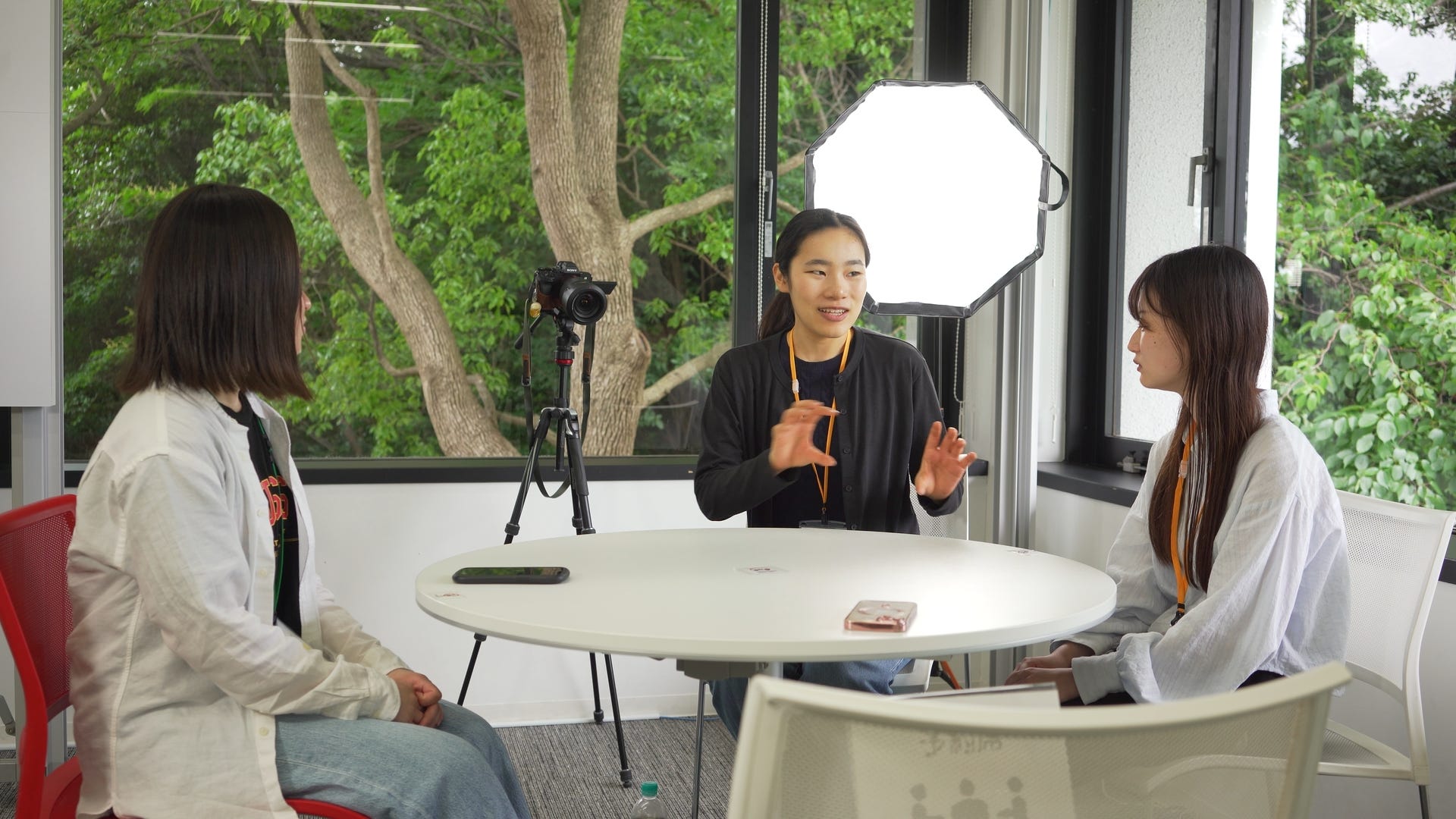
On that day, two student supporters, Ms. Osawa and Ms. Ono, cooperated with us.
Ms. Osawa is a senior student, and she went to the Kanagawa Prefecture library to join a forum. She presented about the attractions of libraries and reading books.
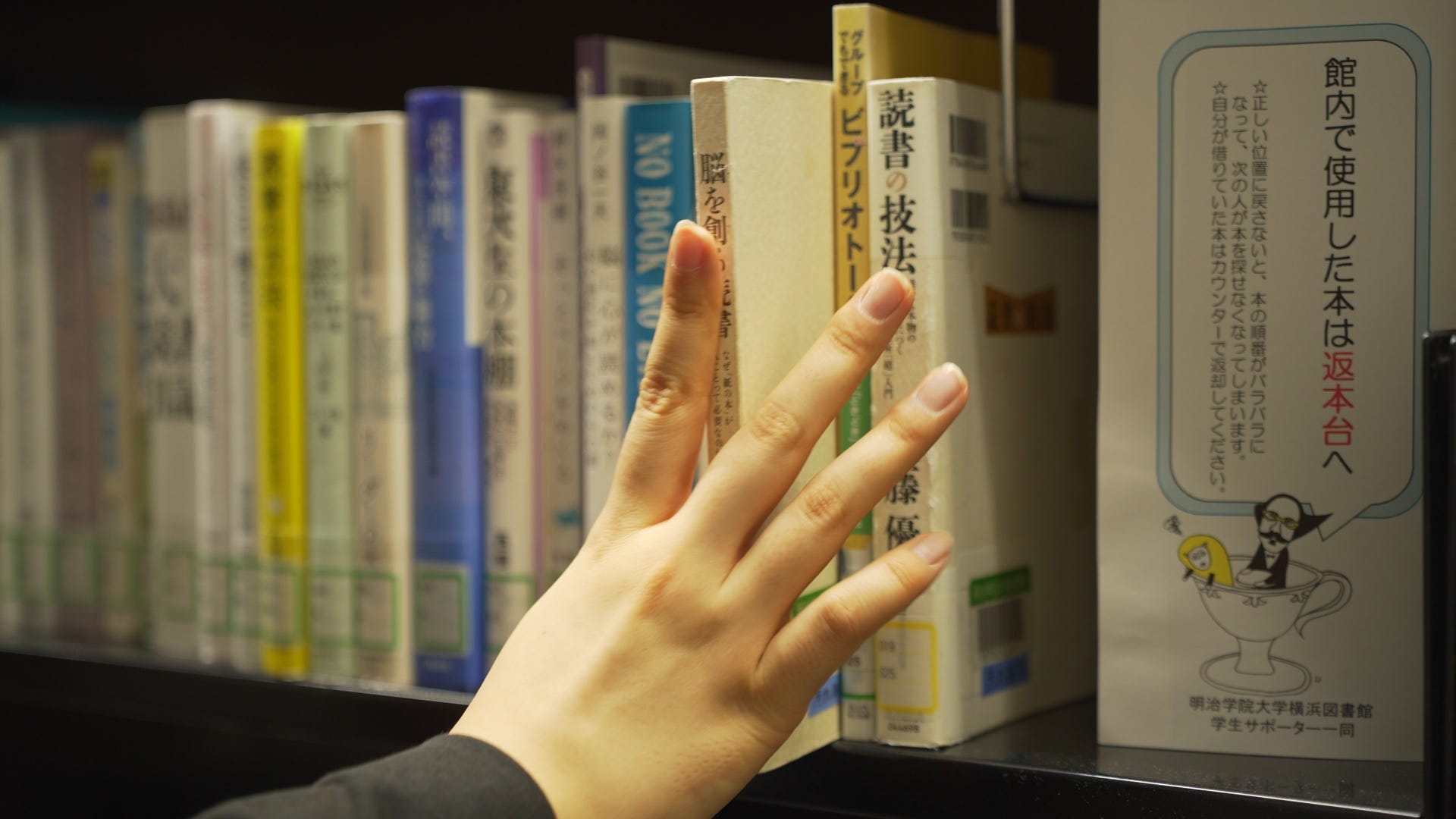
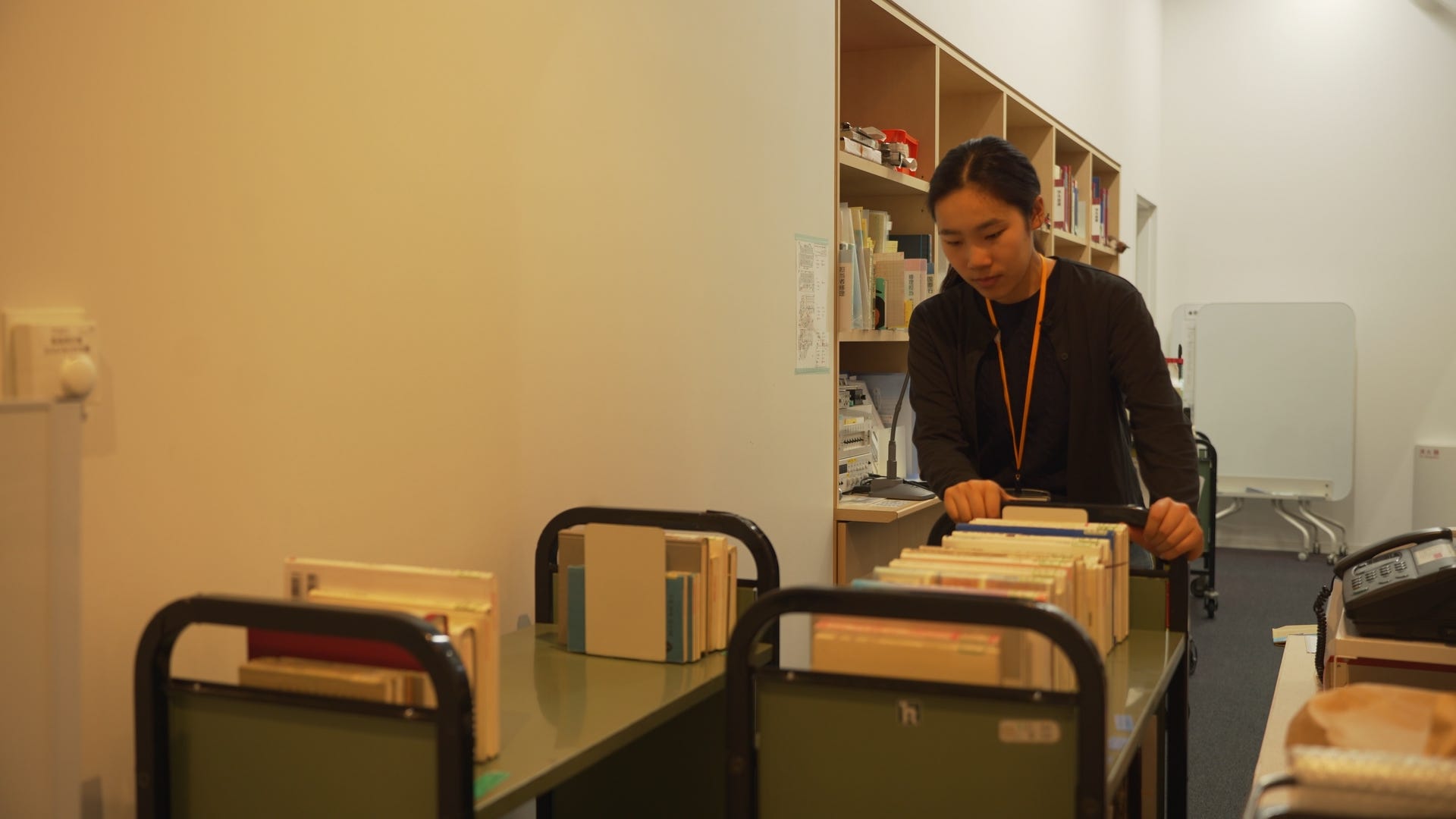
Ms. Osawa
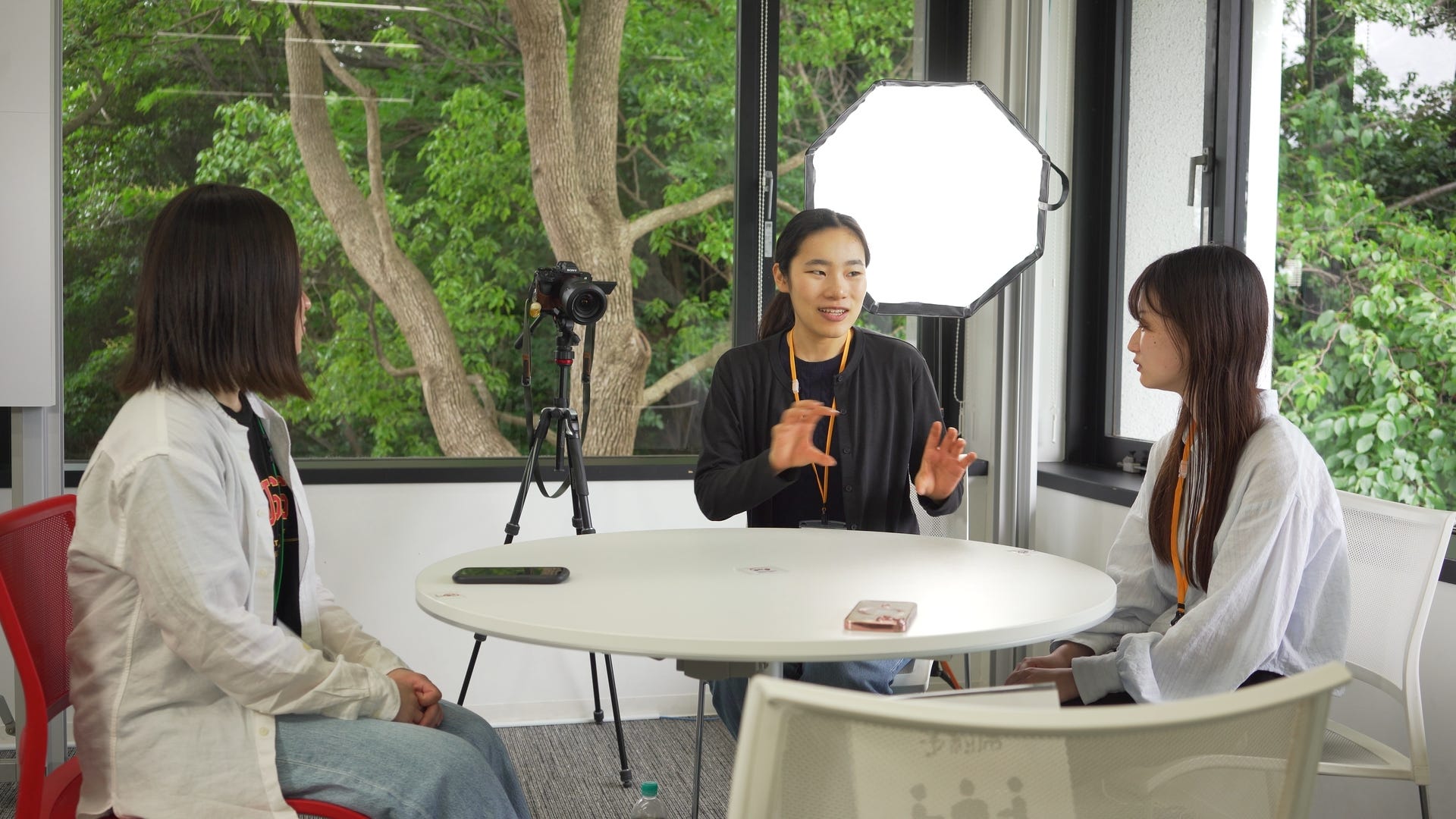
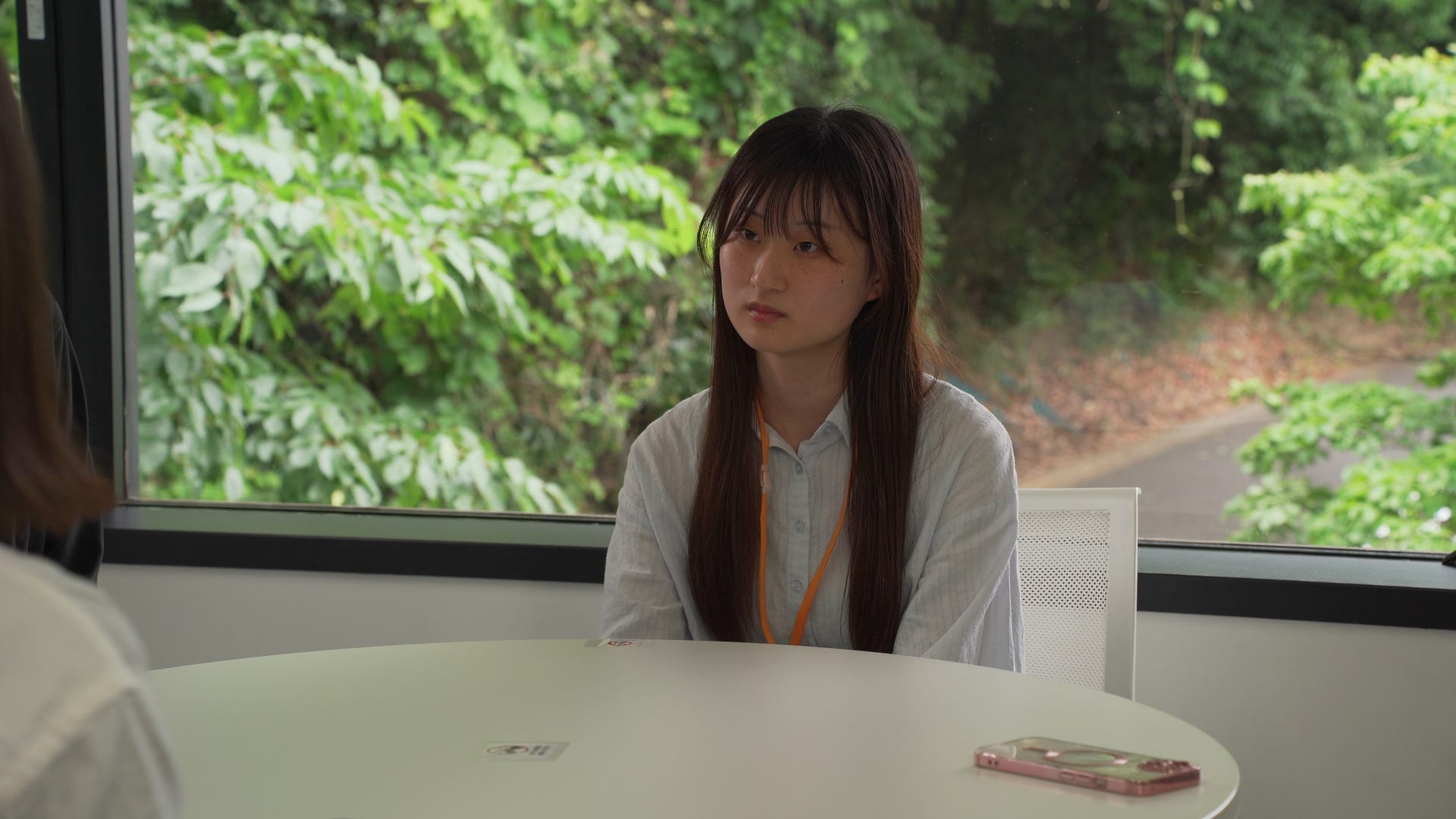
Ms. Ono
These are the questions and answers in the interview.
What is your daily routine in the library? When is the busiest season of the year?
They work morning and afternoon shifts. Their routines include returning books, organizing shelves and magazines, preparing events, and creating “Selected Books” displays. The busiest season is before new students arrive because many senior students have graduated, leaving fewer people to handle several projects simultaneously.
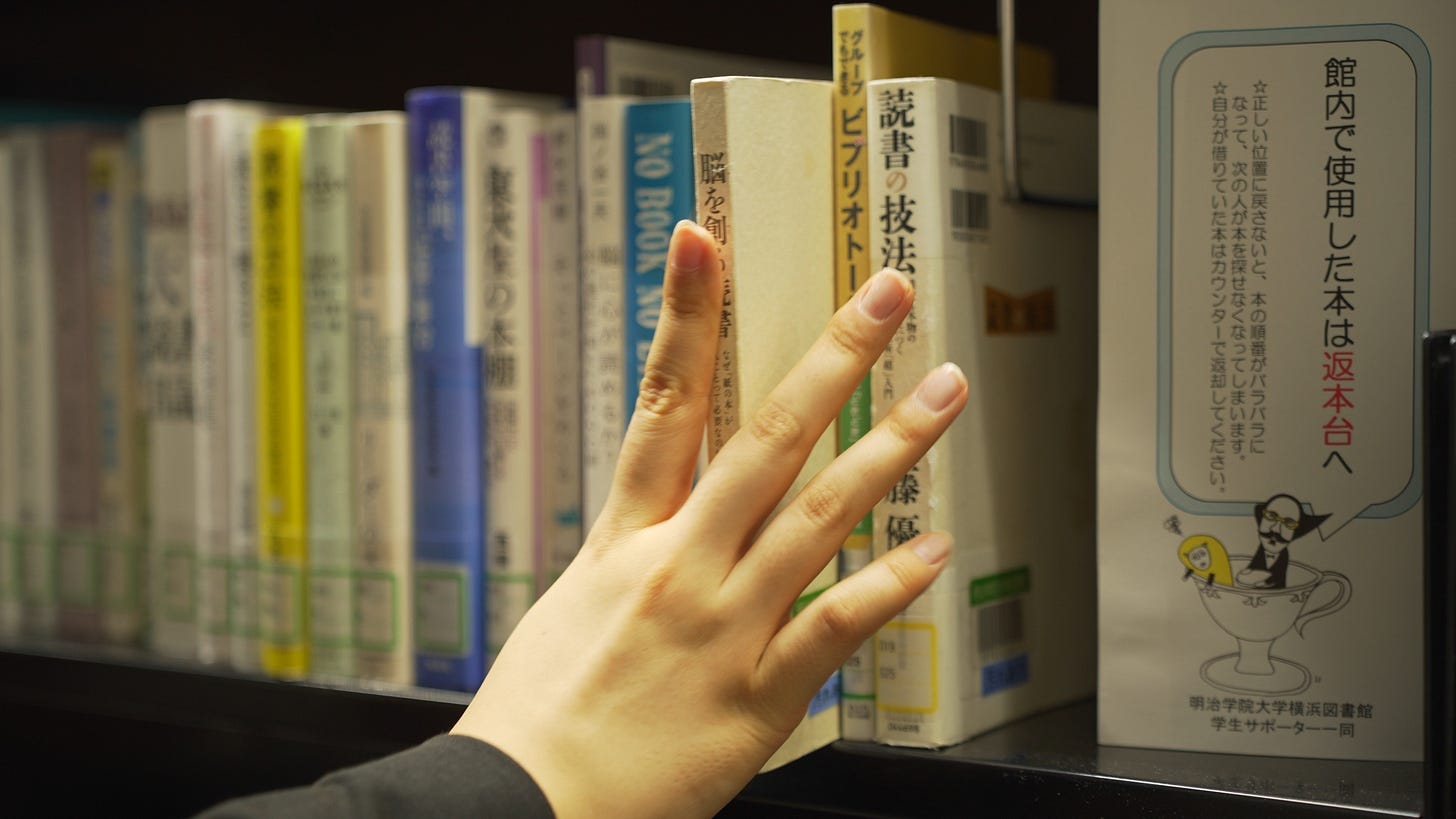
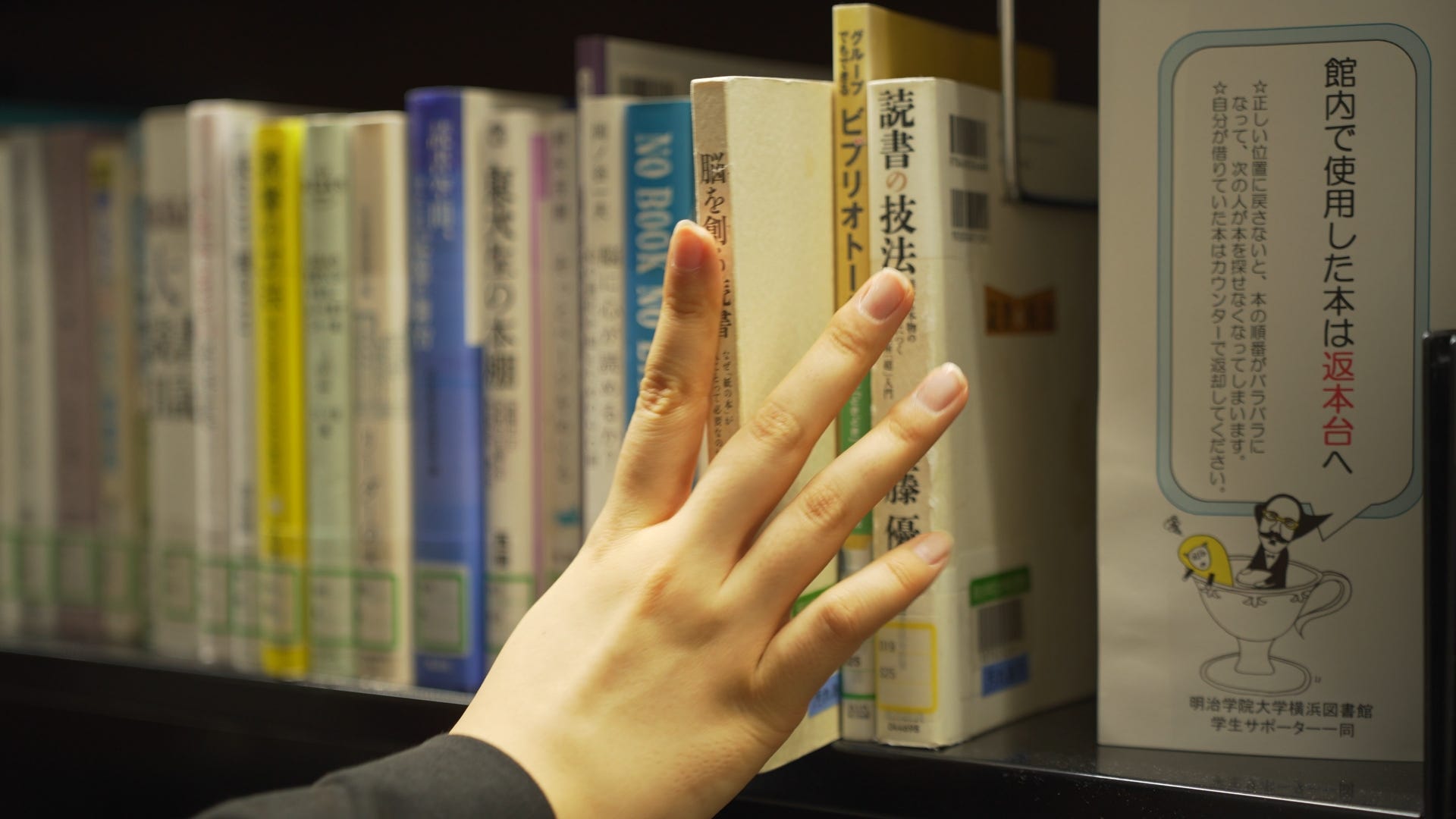
What do you like about this job? Is there any episode that you’ve experienced with students?
Ms. Ono’s most memorable experience is guiding high school students during Open Campus library tours. Student supporters introduce the library and explain their activities. Although planning events is important, she feels most rewarded when students enjoy the events and respond positively. These experiences make the work meaningful and enjoyable.
What kind of person is suitable for working in a library?
Ms. Osawa believes almost anyone can fit the role of student supporter because the team values different strengths and perspectives. Some members are creative, while others are skilled at writing or organizing. According to her, people who enjoy communicating with others or who simply like books would be well suited for the position.
Why did you want to work here? What was the reason that took you here?
Ms. Ono became interested in the library job because of a love of books. However, the biggest attraction was the opportunity to plan projects and recommend books from a student’s perspective. She feels this makes the role unique and enjoyable because it allows student supporters to contribute creative and relatable ideas.
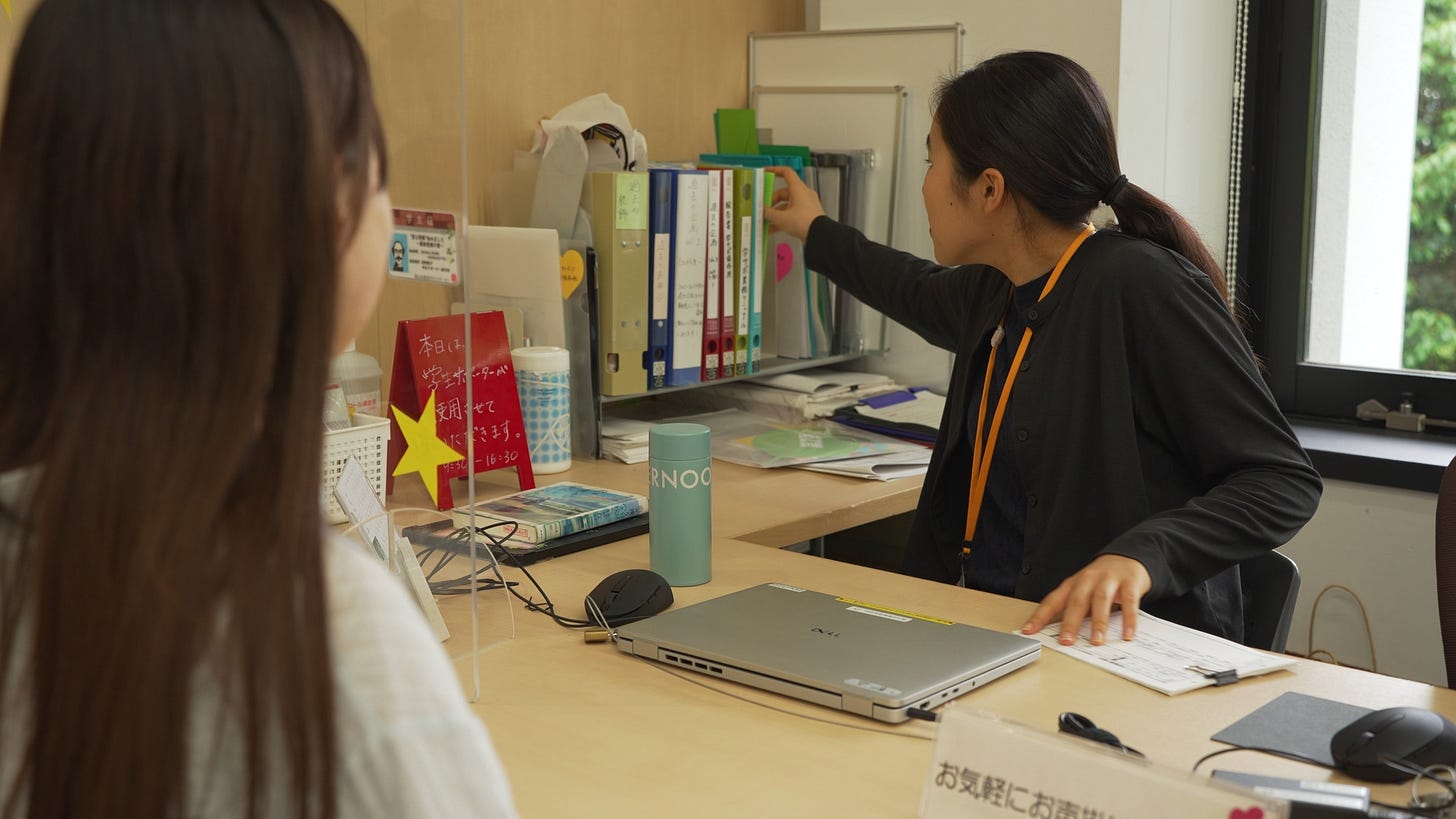
Do you feel any change in the role of libraries due to electronic books?
Ms. Osawa thinks libraries remain important despite the growth of e-books. Libraries provide free access to knowledge for students who cannot afford books. They also serve as study spaces where students can focus and learn together. For these reasons, she believes libraries will continue to play an important educational role.
What do you think about forbidden books (as a university librarian)?
Ms. Ono believes universities should provide access to many viewpoints through books and research materials. Since history and politics involve diverse opinions, banning books too easily could limit learning. She thinks students especially need access to different perspectives when writing research papers, so banned books should remain available in university libraries.
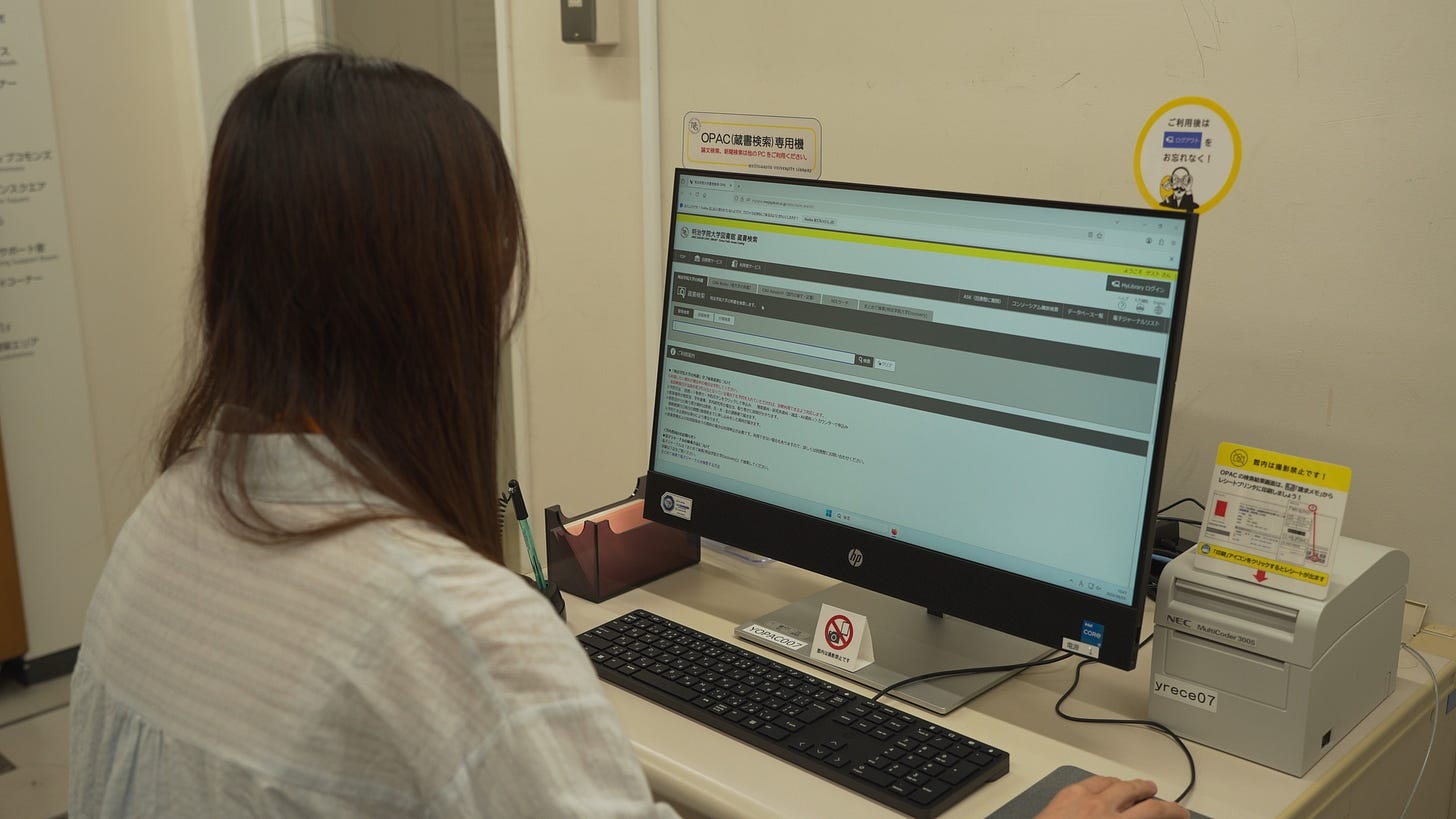
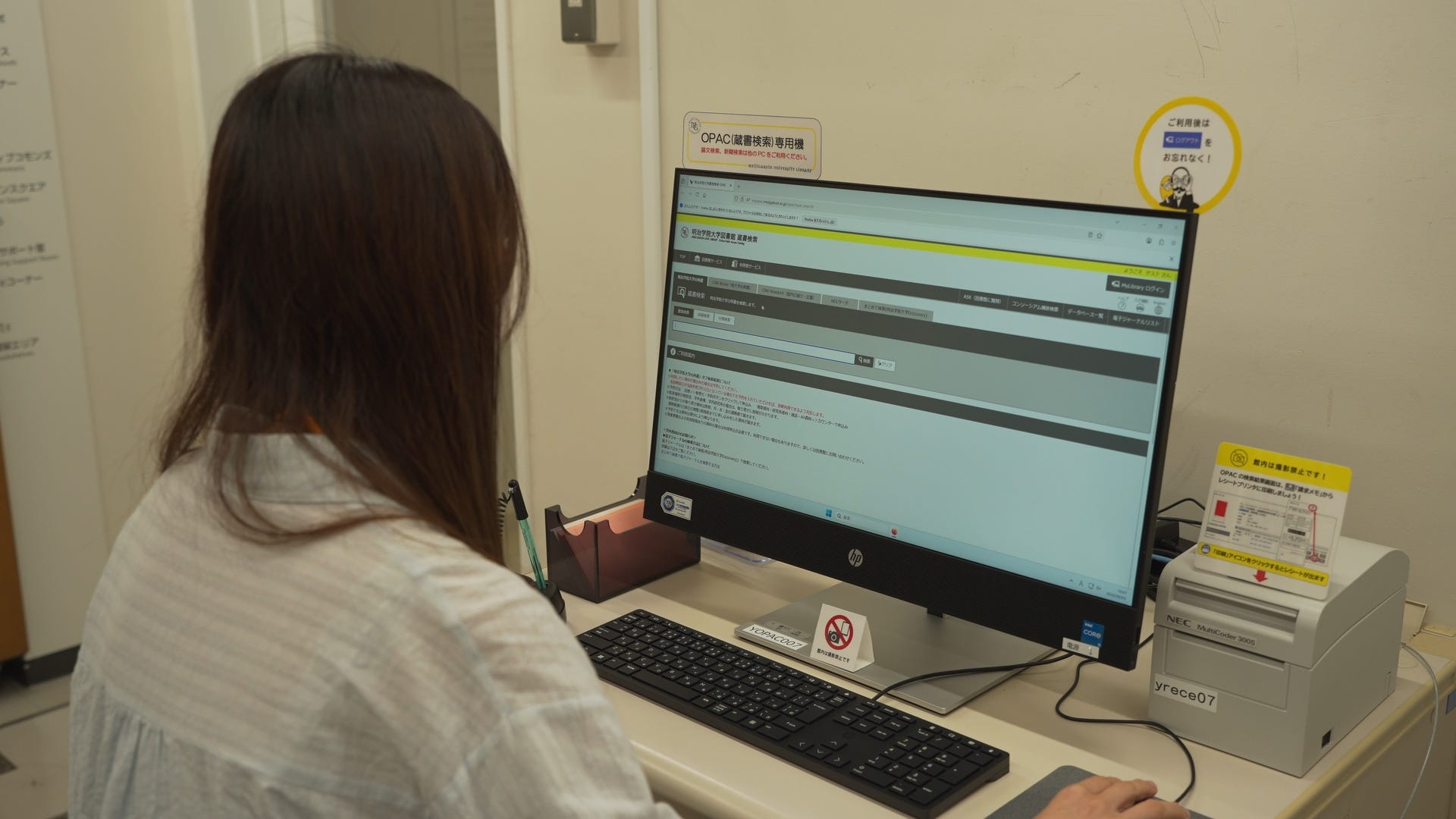
They cooperated with us during the working time. Before and after the interview, they worked there. We really appreciate their cooperation and that of all the library staff.
#4
A Multimedia Research Project
24kc1033 Leo Hiramoto
24kc1051 Ryuta Fukaya
24kc1007 Munetoki Nishio
June 6, 2026
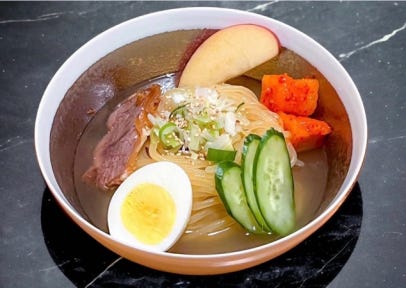
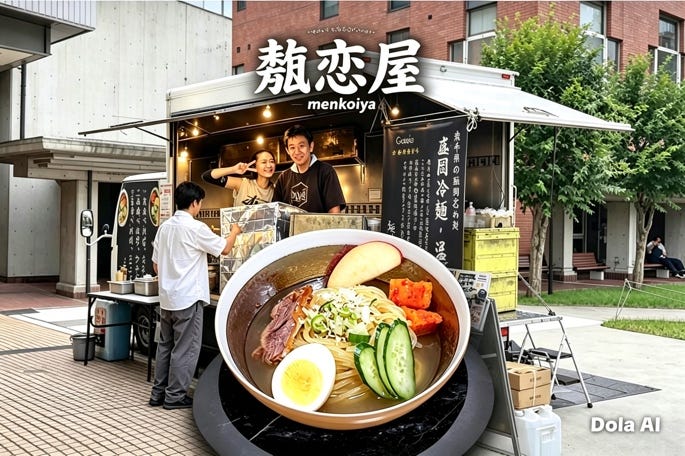
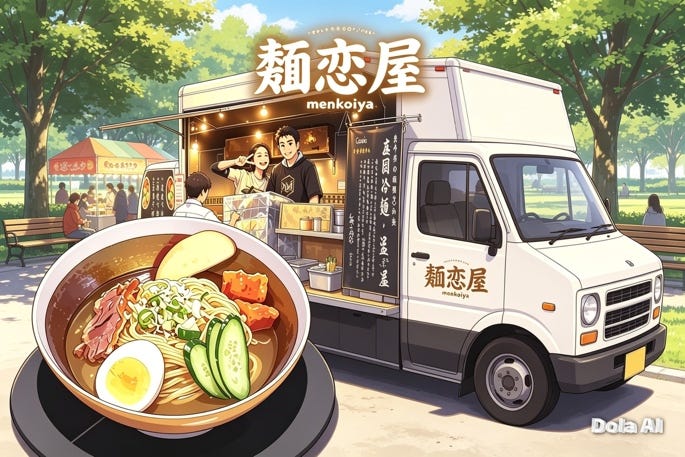
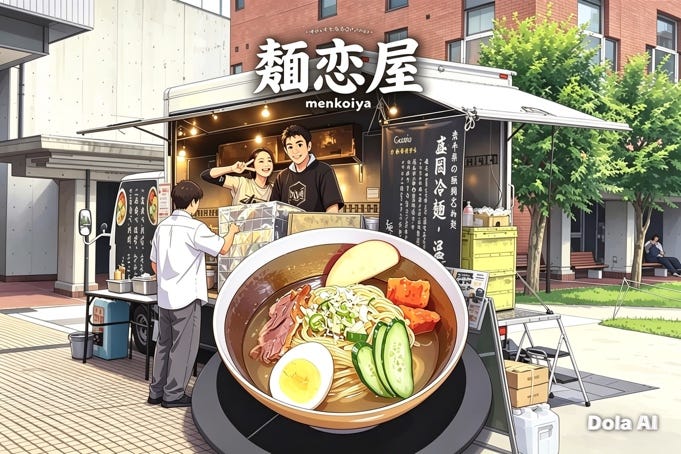
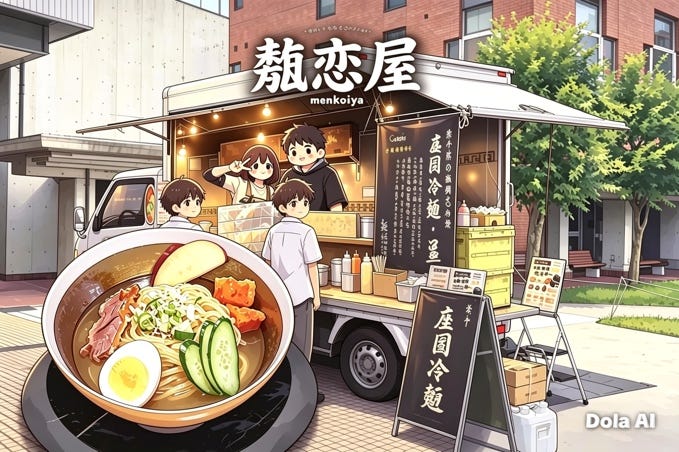
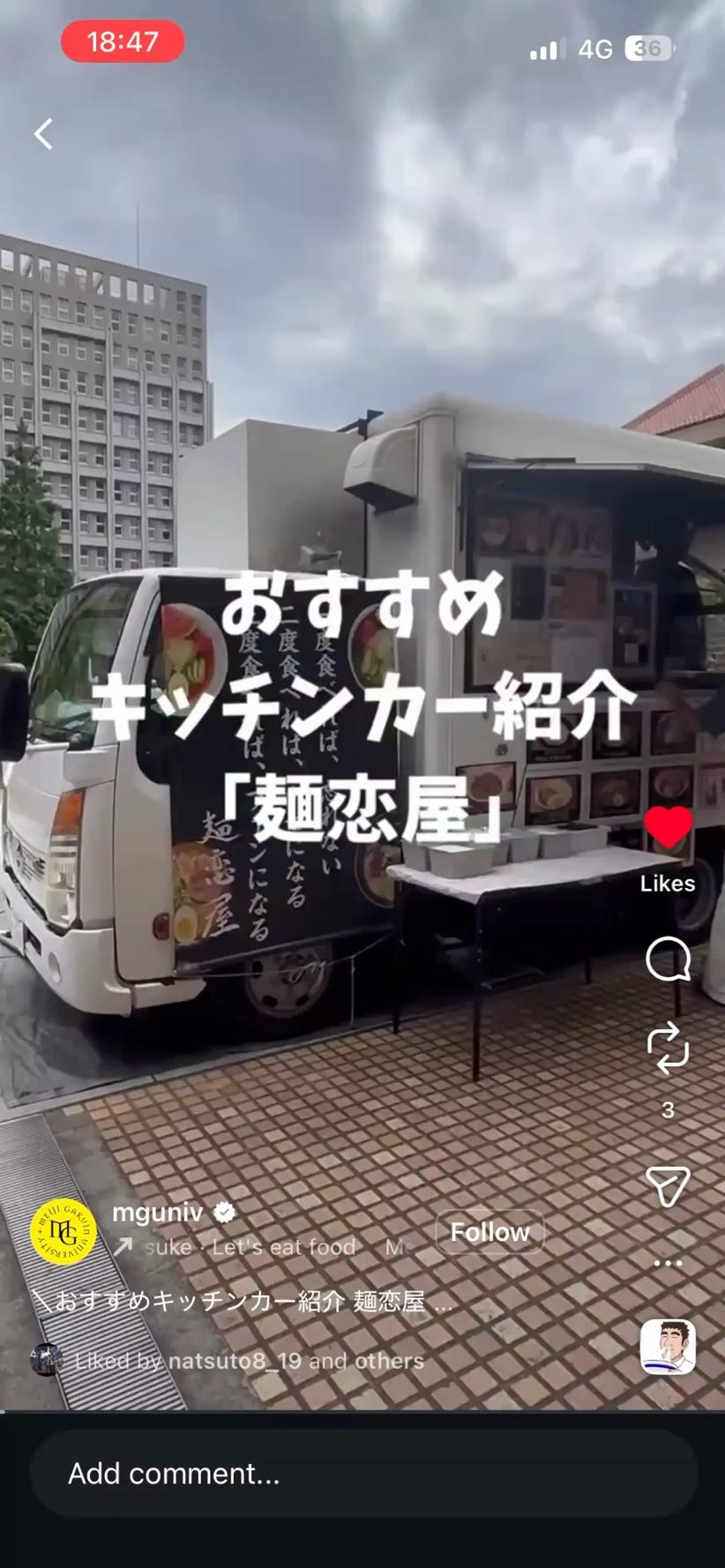
Mr. Shimokoube is the owner and operator of a popular food truck called Menrenya (Noodle Love House). It has now been four years since he began this new chapter of his career, working from a mobile kitchen rather than a traditional storefront.
Originally, he ran a brick-and-mortar restaurant, pouring his heart into the daily operations of a fixed-location business. However, the COVID-19 pandemic dramatically altered everything. Like many small business owners, he found it increasingly difficult to sustain the old model amid lockdowns, declining foot traffic, and changing customer habits. Faced with uncertainty, he began exploring alternative ways to continue his passion for serving noodles. That search led him to the world of food trucks.
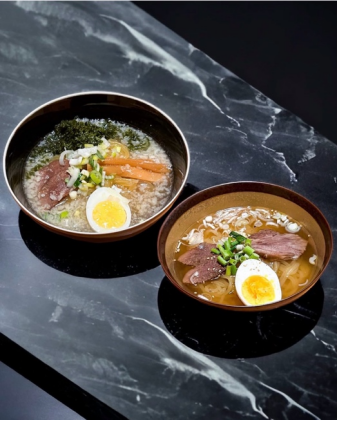
The freedom and flexibility of a kitchen car immediately resonated with him. Unlike a conventional restaurant where one must wait for customers to come through the door, a food truck allows the owner to actively go out and meet people where they are. This shift from passive waiting to proactive engagement opened up new possibilities. “With a food truck, you don’t just sit and wait for customers — you can go meet them yourself,” he explains. “That makes the distance between us incredibly close.”
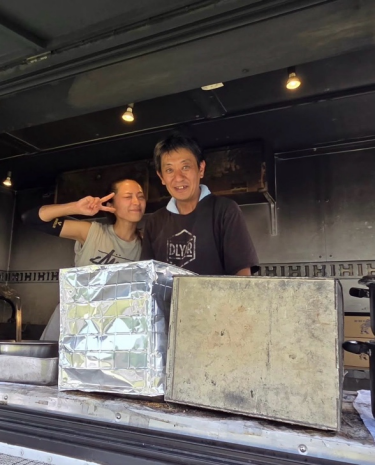
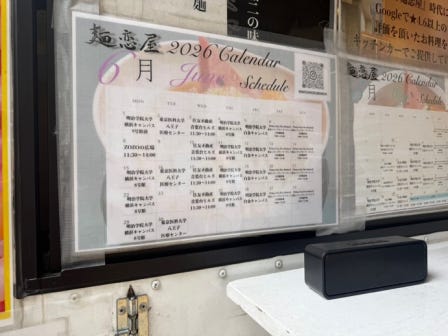
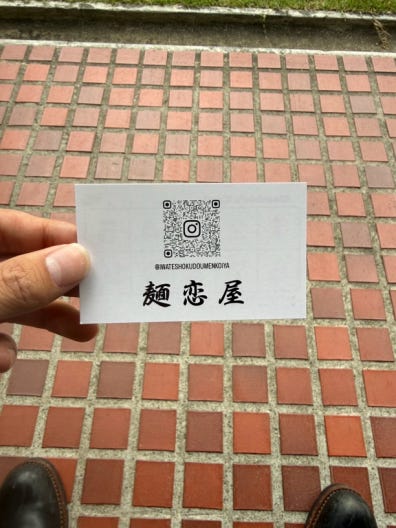
On any given day, Mr. Shimokoube drives to different locations — sometimes bustling event venues, office districts, or local festivals — bringing his signature noodles directly to the community. The close interactions with customers have become one of the most rewarding aspects of the job. Some people stop by on a whim after catching the appetizing aroma, while others become loyal fans who deliberately seek out his truck based on word-of-mouth or social media. Each encounter, whether a quick friendly chat or a heartfelt conversation about his menu, adds meaning to his daily efforts.
Of course, operating a food truck is far from glamorous or easy. One of the biggest challenges is dealing with the elements. Unlike indoor restaurants, the business is fully exposed to the weather. Rain can drastically reduce the number of customers, while strong winds bring additional hazards — everything from flying tarps and equipment to the constant worry of safety. On stormy days, simple tasks like keeping the serving window stable or protecting ingredients become serious struggles. Yet, despite these difficulties, Mr. Shimokoube maintains a calm and positive outlook.
“It’s definitely tough,” he says with a gentle smile, “but I still find it really enjoyable.”
This lifestyle has allowed him to rediscover the joy of his craft. By changing locations regularly, he meets a diverse range of people — from busy office workers looking for a quick, comforting meal to families enjoying a day out. These connections have enriched both his business and his personal life. The direct feedback from customers helps him refine his recipes and service, while the sense of freedom gives him a feeling of control that was harder to maintain in a traditional shop setting.
Four years into this journey, Mr. Shimokoube continues to evolve. Menrenya is more than just a food truck — it represents resilience, adaptability, and a deep love for connecting with people through food. For him, every day on the road is both a new challenge and a fulfilling opportunity to live and work authentically.
In an era where many businesses were forced to reinvent themselves, his story stands as an inspiring example of turning crisis into opportunity. Through rain, wind, and changing circumstances, the warm bowls of noodles from Menrenya keep bringing people together — one location, one smile, and one satisfying meal at a time.
~ AI-Generated Images~
~Video~
#5
The Researcher / Writer: Yao Wanyan
The Visual Producer (Photo/Video): Sun Zhiwei
The AI & Media Editor: Nanami Kashiwazaki
Bridging Cultures Through Service: A Haidilao Employee’s Story
Bridging Cultures Through Service: A Haidilao Employee’s Story
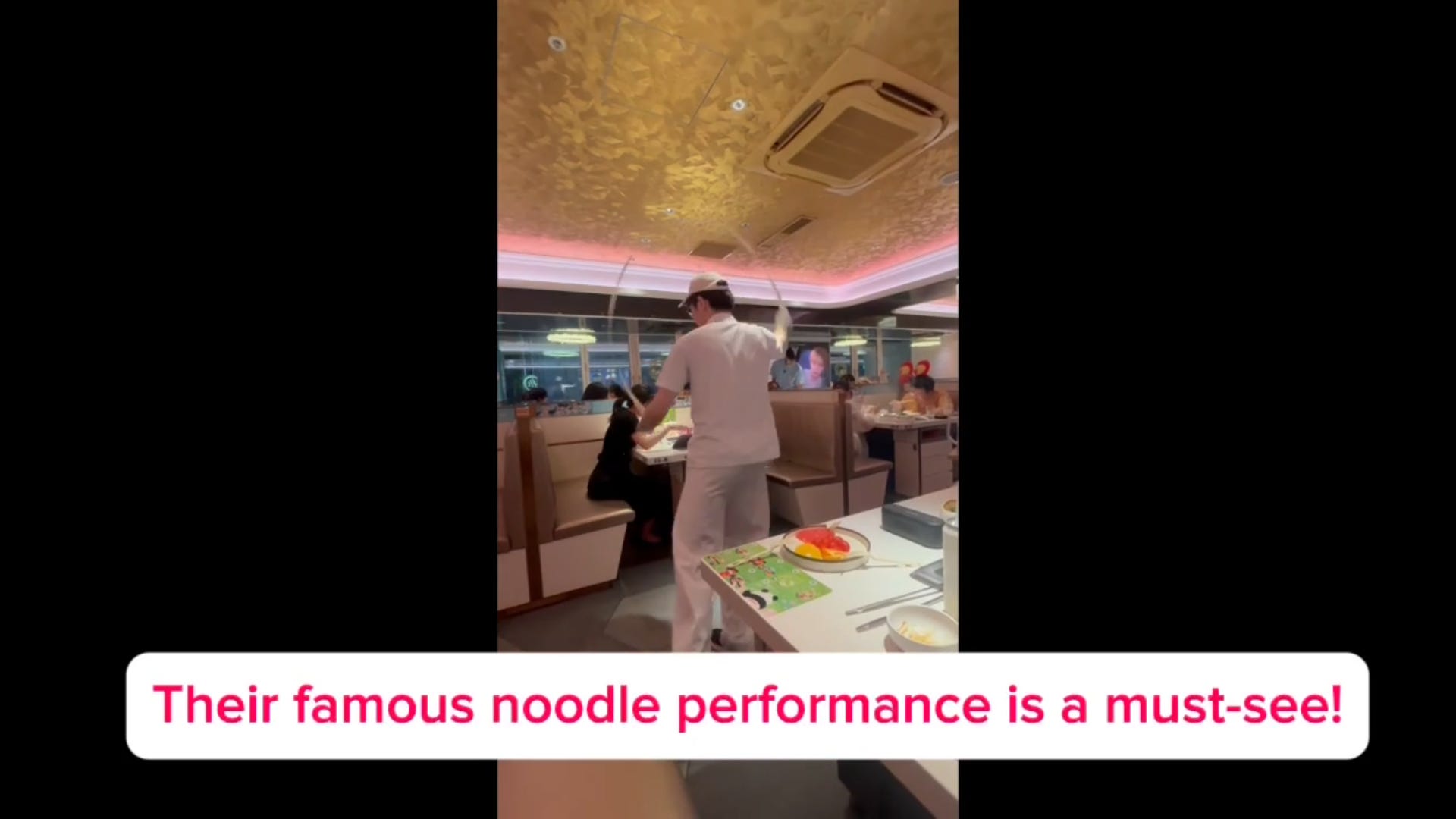
Many people visit Haidilao to enjoy hotpot and experience its famous customer service. However, few people think about the employees who work hard behind the scenes to create that experience. For our multimedia research project on jobs and work, we interviewed a Haidilao employee and learned about his daily responsibilities, career background, and unique experiences working in an international environment.
The employee we interviewed is Japanese, but he can also speak Chinese fluently. Before working at Haidilao, he studied abroad in China. During his time there, he learned the Chinese language and became familiar with Chinese culture. This experience later influenced his decision to work at Haidilao, a Chinese hotpot restaurant that serves customers from many different backgrounds.
Currently, he works as a restaurant staff member at Haidilao. His responsibilities include greeting customers, taking orders, serving food, preparing tables, and helping maintain the restaurant’s high standards of customer service. According to him, every day begins with preparing the dining area and checking that everything is ready before customers arrive. Cleanliness and organization are important because they help create a comfortable dining experience.
One of the most valuable skills he brings to the workplace is his ability to communicate in both Japanese and Chinese. Haidilao often welcomes Chinese tourists, international students, and residents living in Japan. Because he speaks both languages, he can help customers who may not be comfortable communicating in Japanese. He explained that being able to assist customers in their native language often makes them feel more relaxed and welcome.
The employee told us that the busiest periods are usually during lunch and dinner hours, especially on weekends and holidays. During these times, the restaurant can become very crowded, and employees must work efficiently while maintaining a friendly attitude. Teamwork is extremely important because staff members need to cooperate closely to ensure that customers receive fast and high-quality service.
Although restaurant work can be physically demanding, he enjoys many aspects of his job. He likes meeting people from different countries and using the language skills he developed while studying abroad. He also appreciates the opportunity to learn more about communication, customer service, and problem-solving. These experiences have helped him grow both professionally and personally.
Of course, the job also comes with challenges. Employees spend many hours standing, moving around the restaurant, and responding to customer requests. Busy periods can be stressful, especially when many customers arrive at the same time. However, he believes that these challenges help him become more responsible and adaptable. He also said that positive feedback from customers makes the hard work worthwhile.
Through this interview, we learned that restaurant employees do much more than simply serve food. They help create a positive atmosphere, solve problems, and ensure that customers enjoy their experience. In this employee’s case, his international background and language abilities allow him to connect people from different cultures and improve communication within the restaurant.
This project gave us a greater appreciation for the hard work performed by service industry employees. It also showed us how language skills and international experiences can be valuable in the workplace. The story of this Haidilao employee demonstrates that work is not only about completing tasks but also about building connections between people from different backgrounds and cultures.
#6
Bringing the Taste of Hunan to Japan:
The Story of Mr. Chen
GUO ZHIJIA YAN JINGHAO
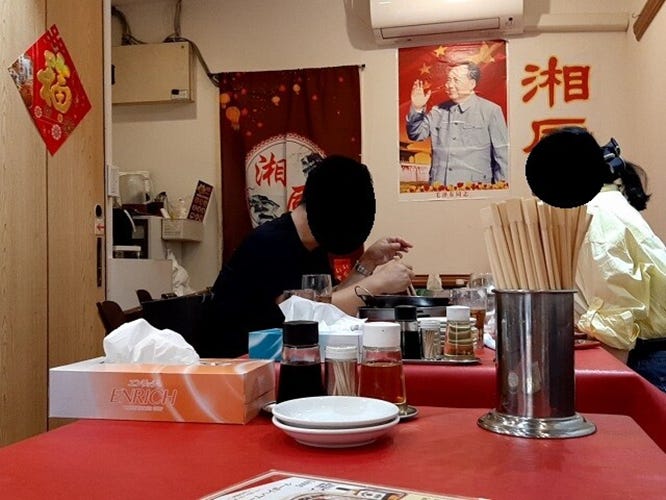
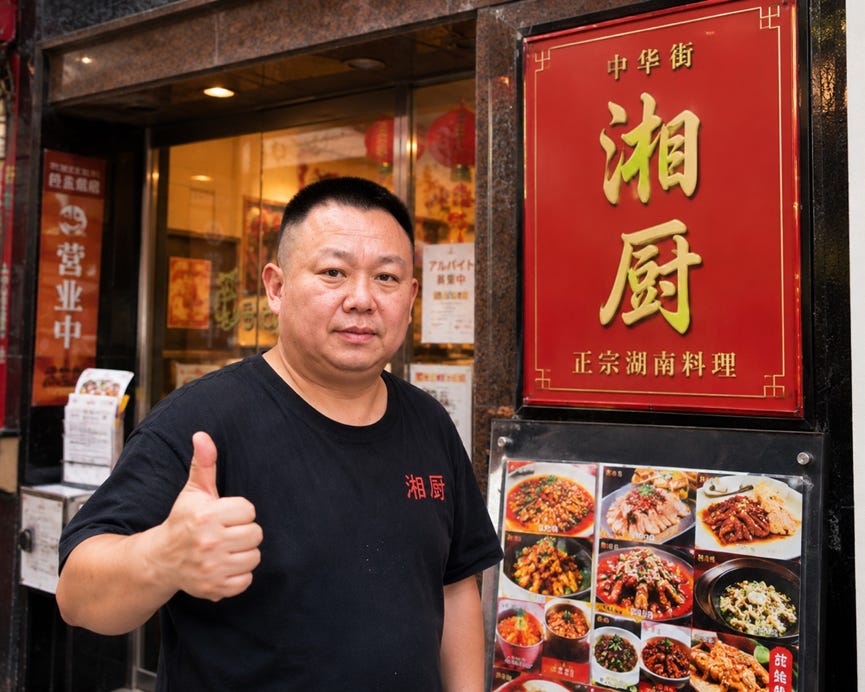
For many people, a restaurant is simply a place to eat. However, for Mr. Chen, owner of a Hunan cuisine restaurant in Yokohama Chinatown, it represents years of hard work, determination, and a dream that began far from Japan.
Mr. Chen arrived in Japan in 2008. At that time, China’s economy was still developing, and many young people looked abroad for new opportunities. Like many immigrants, he hoped to build a better future through hard work. After arriving in Japan, he worked in the restaurant industry for more than thirteen years. During that time, he learned about Japanese food culture, customer service, and restaurant management.
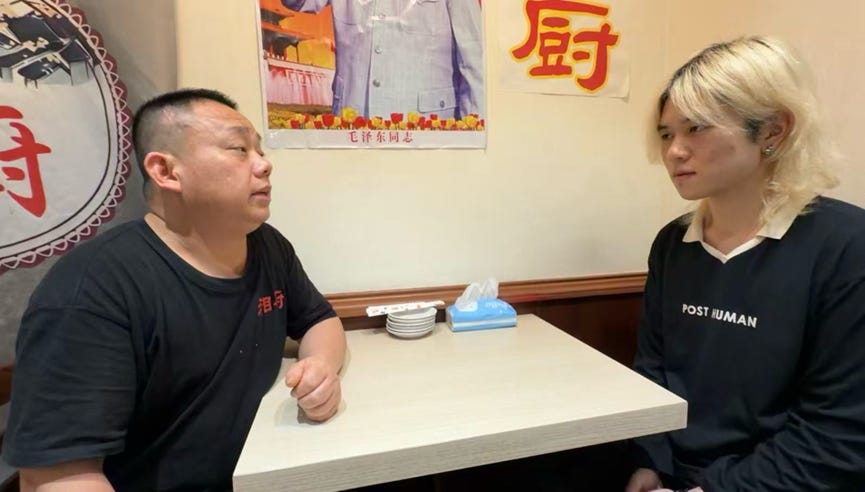
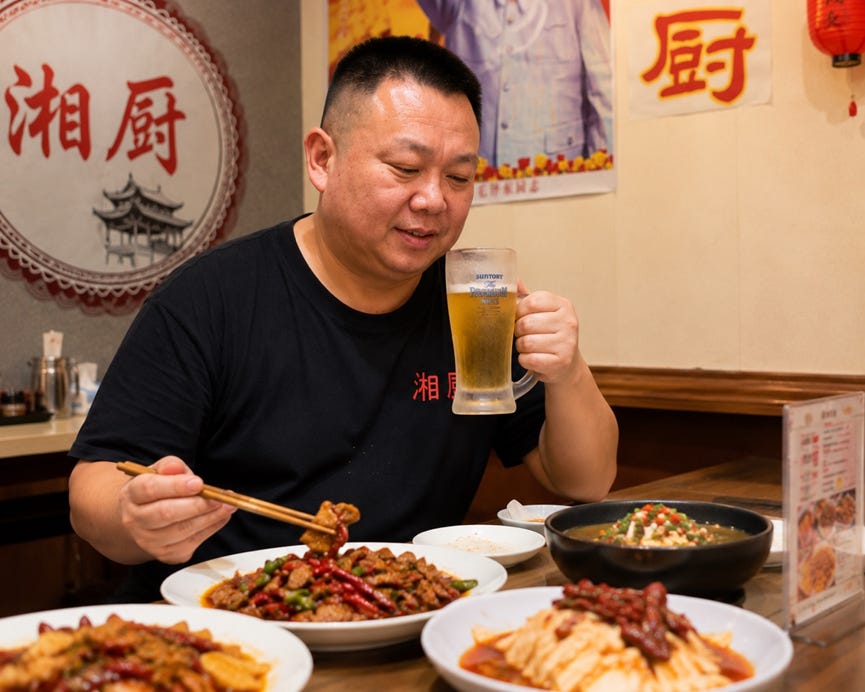
Although he adapted to life in Japan, there was one thing he often missed: the authentic taste of his hometown in Hunan Province. After long workdays, especially late at night, he sometimes wanted to enjoy traditional Hunan dishes with a cold beer. However, he found that many Chinese restaurants in Japan had modified their recipes to suit local tastes. While the food was popular, it often lacked the strong flavors and spicy character of true Hunan cuisine.
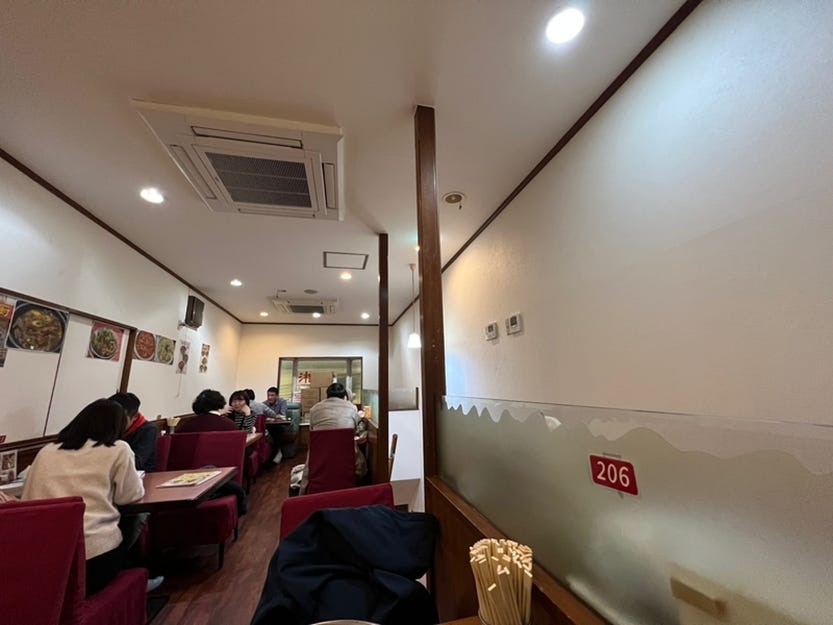
This experience inspired a dream. Mr. Chen wanted to create a place where people could enjoy authentic Hunan food without compromise. However, opening a restaurant was not easy. Before starting his own business, he first needed to obtain permanent residency in Japan. After years of dedication and effort, he finally achieved that goal and gained the opportunity to open his own restaurant.
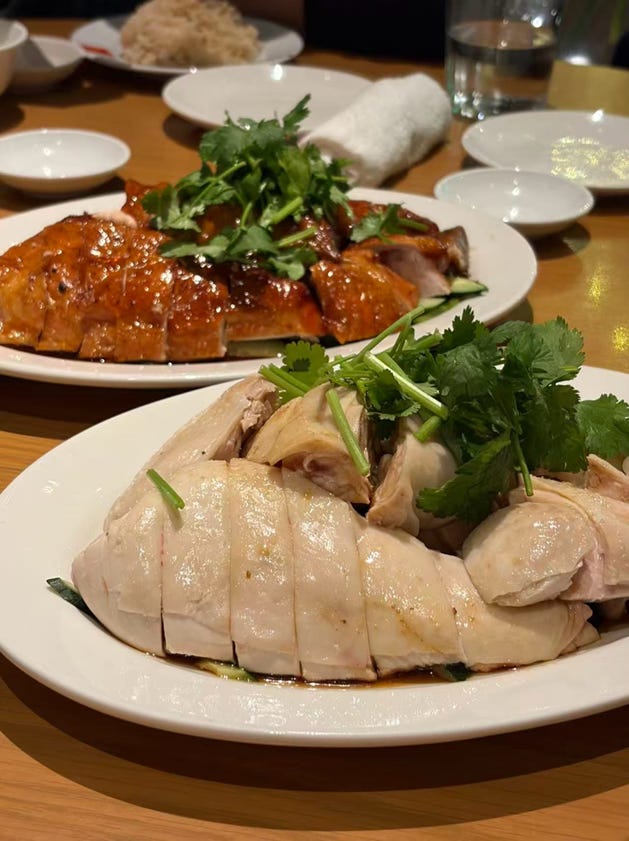
When the restaurant opened in Yokohama Chinatown, it became more than just a business. It was the realization of a personal dream. Mr. Chen wanted not only to satisfy his own longing for hometown flavors but also to introduce genuine Hunan cuisine to both Chinese and Japanese customers. At the same time, he understood that some Japanese guests might not be familiar with extremely spicy food, so he carefully added several dishes with flavors adjusted to local preferences. This balance allowed the restaurant to welcome a wider range of customers while preserving the essence of Hunan cooking.
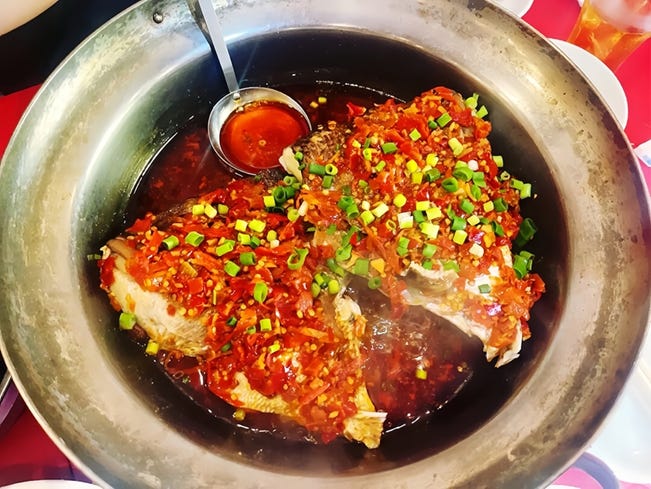
According to Mr. Chen, making money was never the primary reason for opening the restaurant. His first motivation was much simpler: he wanted people to experience delicious and authentic Hunan cuisine. Profit was important for keeping the business running, but sharing the food he loved remained his true passion.
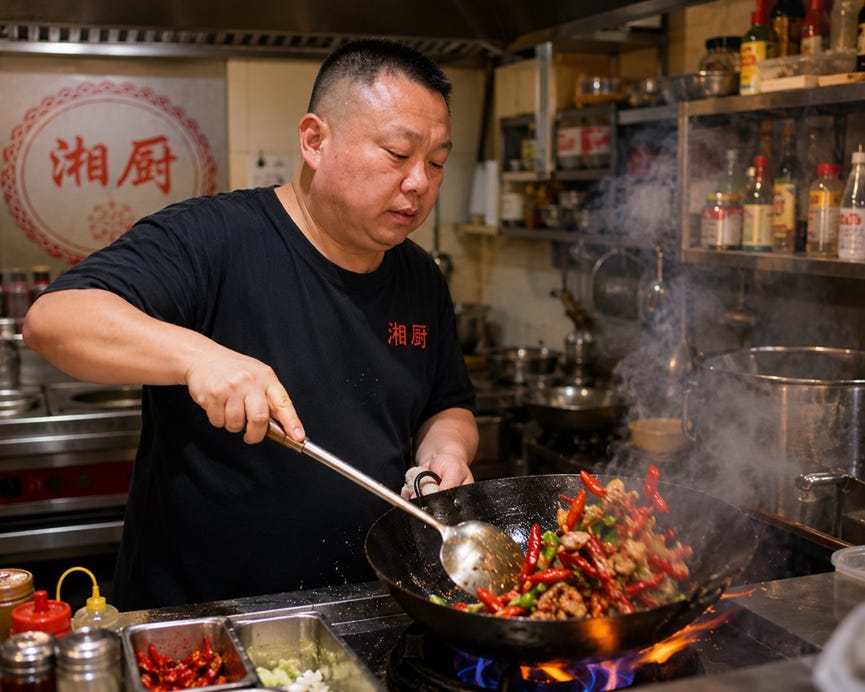
One of the biggest challenges he faced was finding suitable ingredients. Surprisingly, something as simple as chili peppers became a major obstacle. Mr. Chen experimented with peppers from many different regions, but none of them produced the exact flavor he remembered from home. Even when the cooking methods were identical, the final taste was still missing something important.
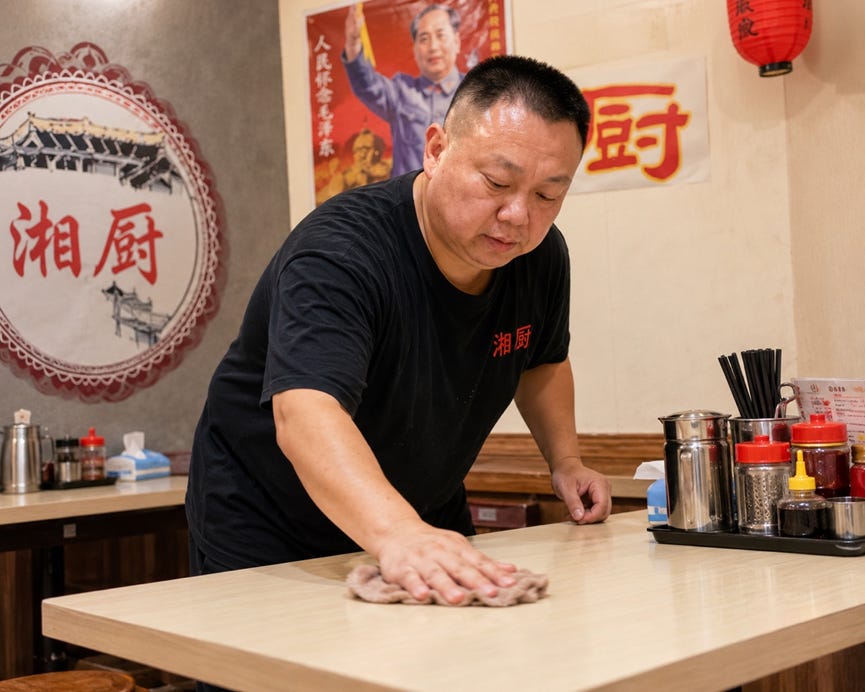
AI Images
Rather than giving up, he searched for another solution. Eventually, he began growing his own chili peppers. This required additional time, effort, and patience, but he believed it was necessary. For Mr. Chen, authenticity is not just about following a recipe. It is about preserving the unique taste and cultural identity of Hunan cuisine.
Today, customers visiting his restaurant are enjoying more than a meal. They are experiencing the result of years of perseverance and dedication. Mr. Chen’s story shows that behind every successful restaurant is a person with dreams, challenges, and a deep commitment to their craft. Through his work, he has brought a piece of Hunan to Japan, allowing people from different backgrounds to share and appreciate the flavors of his hometown.
AI pictures
#7
The Culinary Entrepreneur: A food truck cook
Team members: Yume Amano, Mayu Yanagihara, Yukinaga Aoshima
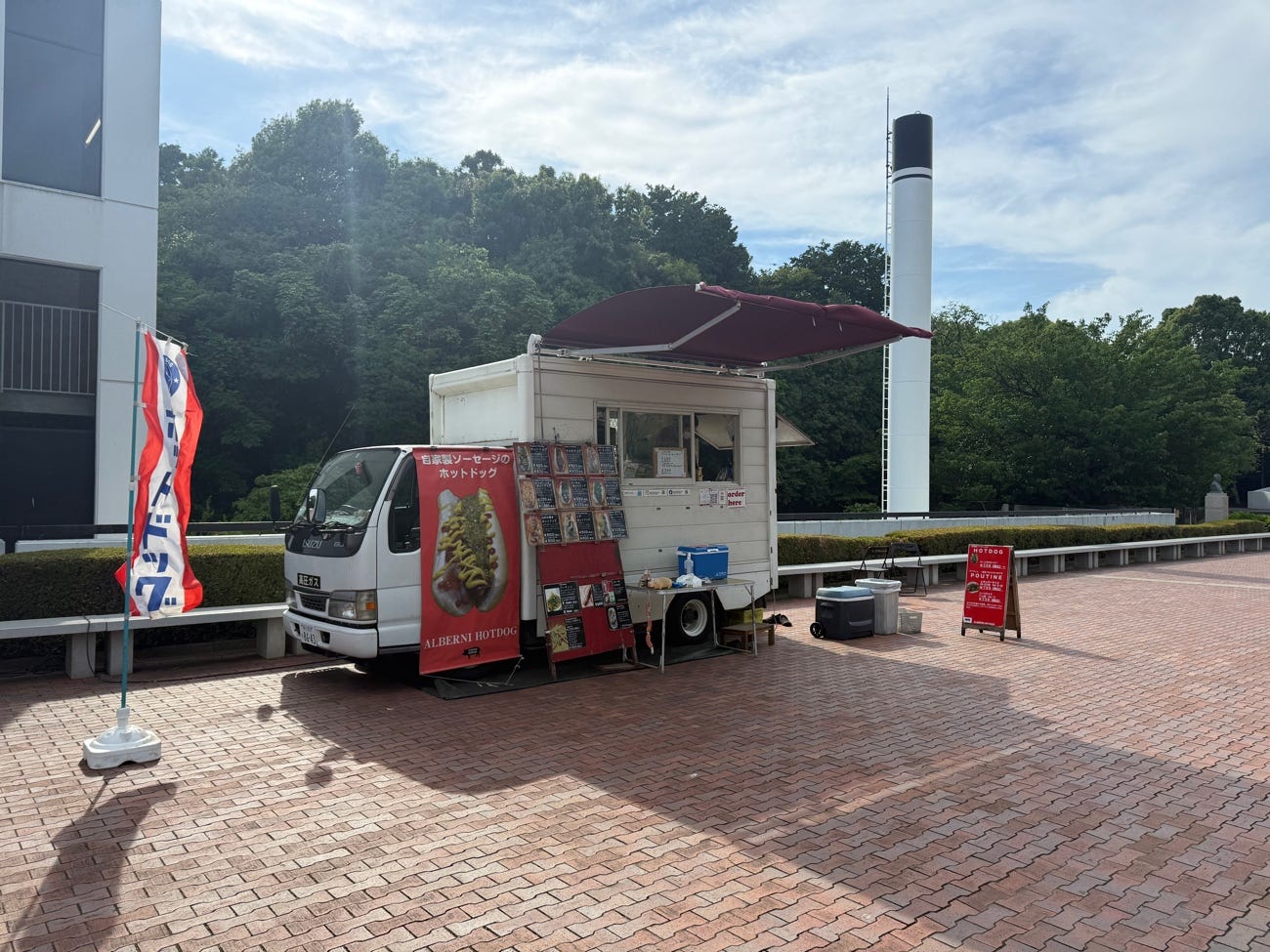
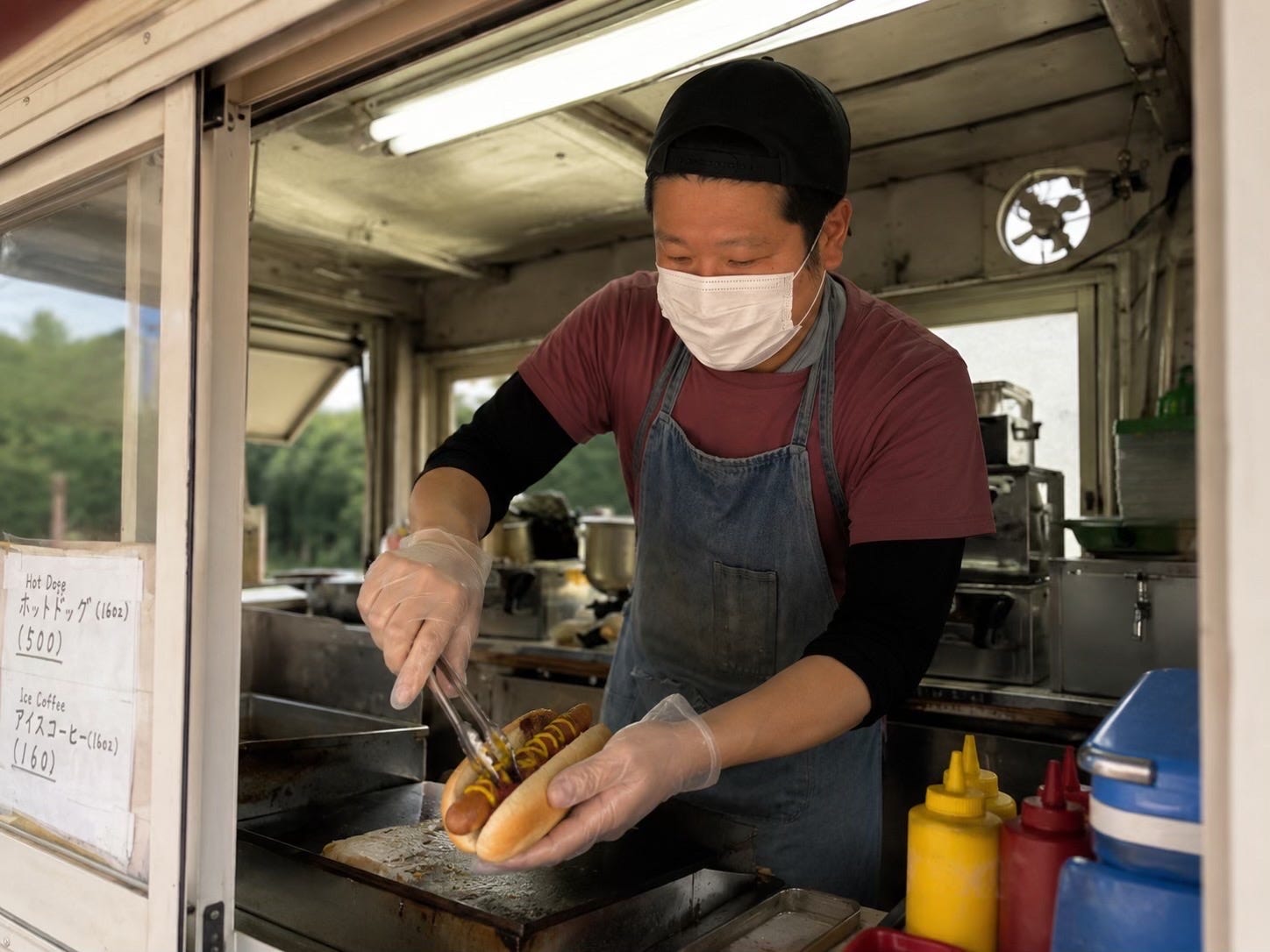
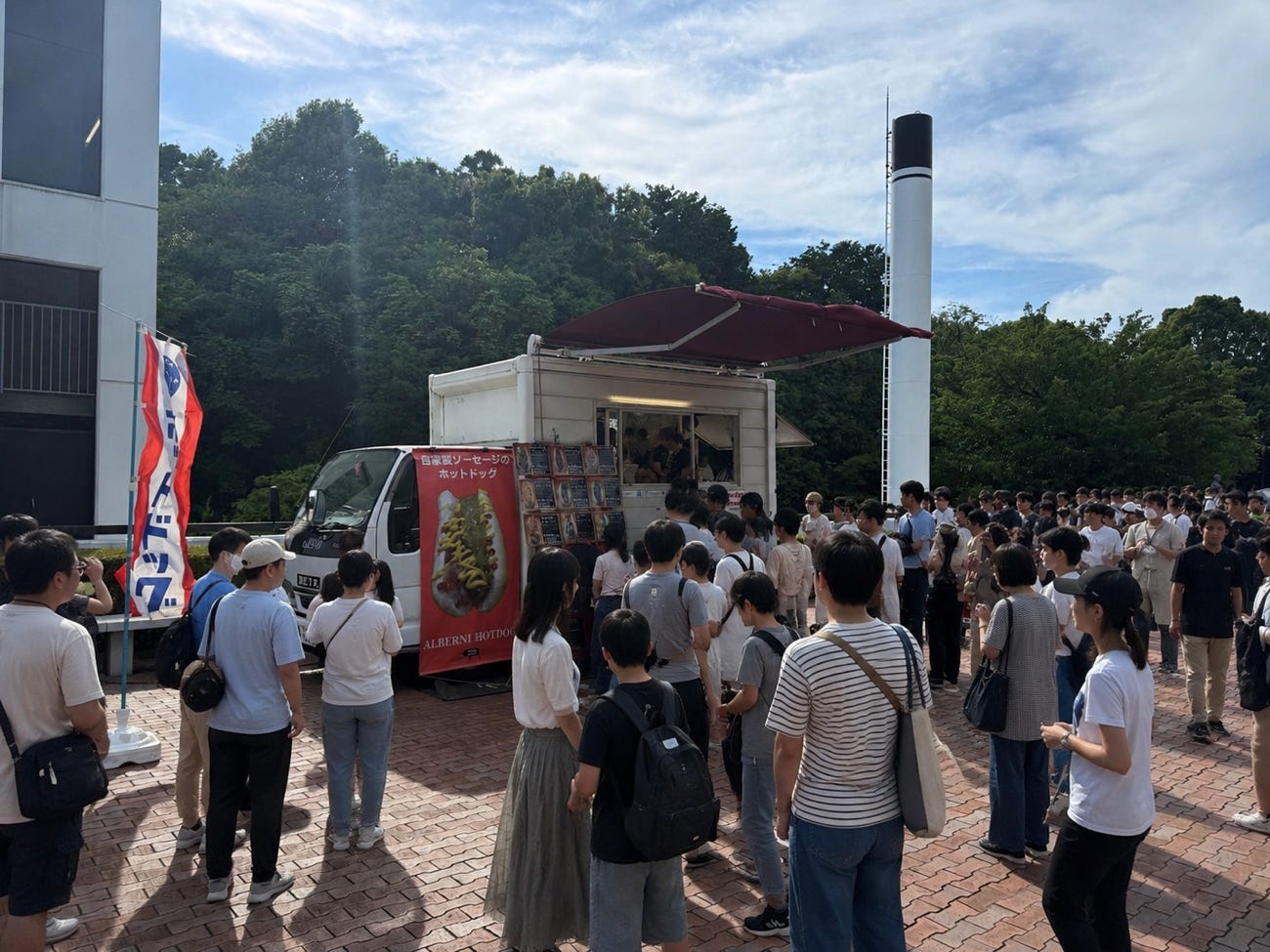
At lunchtime, Meiji Gakuin University becomes full of energy. Students gather with their friends, take a break from classes, and look for something good to eat. Among the many familiar sights on campus is a food truck that attracts a steady line of customers every week. While many students enjoy its food, few know the story of the person behind the truck.
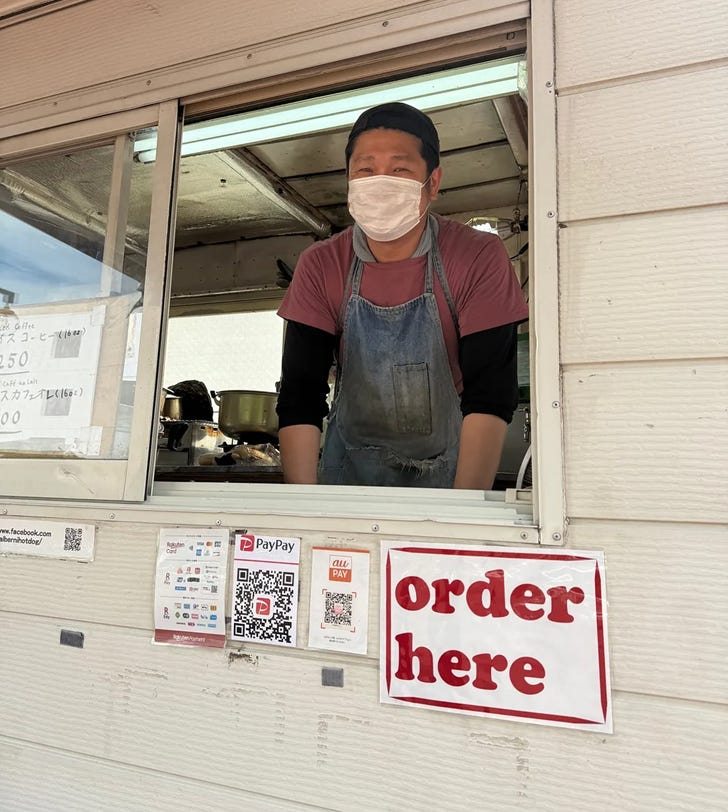
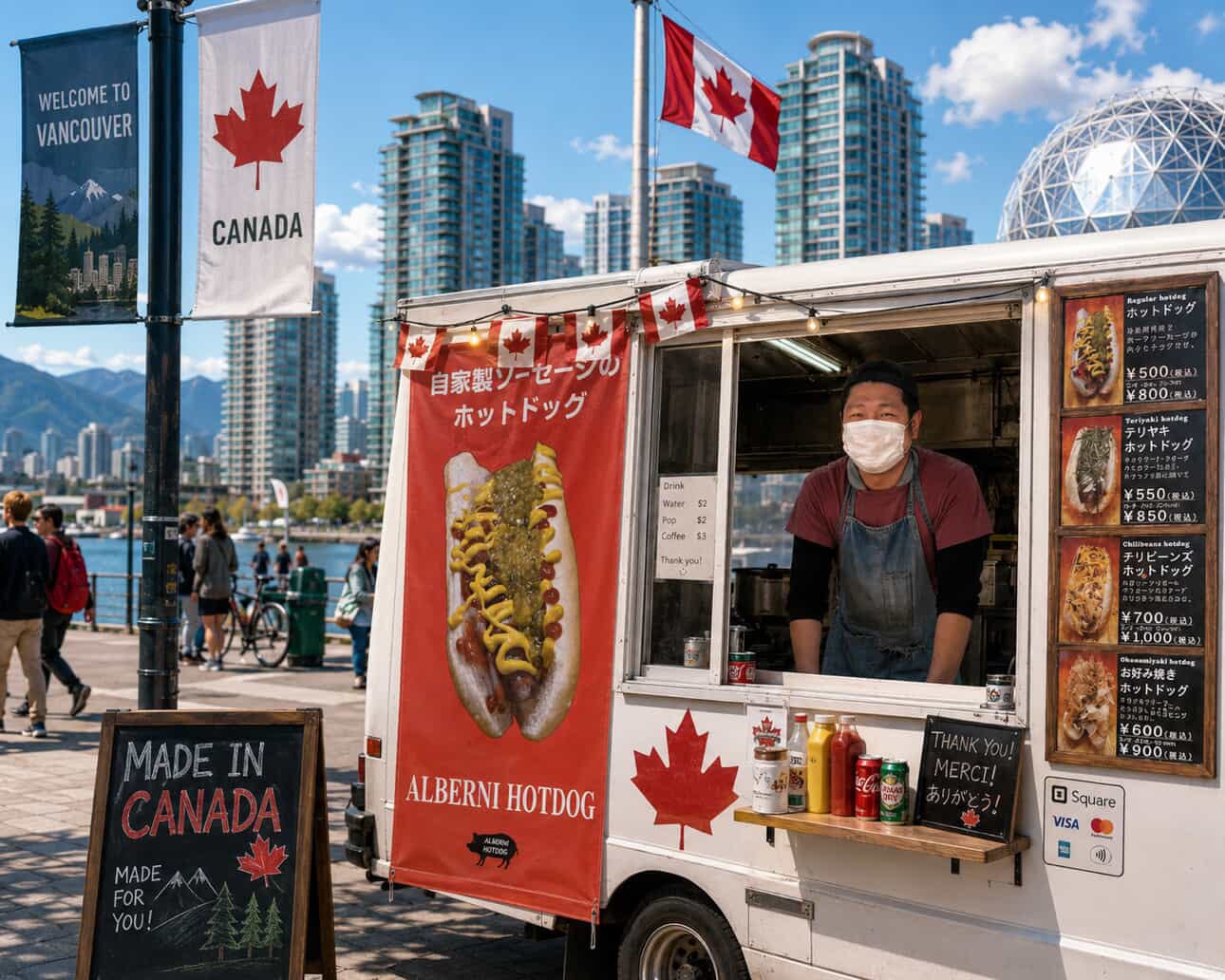
The owner has been running the food truck business for about nine years. Before starting this career, however, he had a very different experience. He worked at a hot dog shop in Vancouver, Canada. There, he learned about customer service, food preparation, and the fast-paced environment of the food industry. Working in a multicultural city also allowed him to meet people from different backgrounds and understand how food can bring people together. These experiences inspired him to start his own food truck business after returning to Japan.
Finding places to operate was not easy in the beginning. The owner explained that he visited many universities and introduced his business, hoping to find opportunities to sell food on campus. Many schools were not interested, but Meiji Gakuin University happened to welcome the idea. What started as a simple business opportunity eventually became a long-term relationship with the university. For nearly a decade, the food truck has been a familiar part of campus life.
Although Meiji Gakuin University is one of his regular locations, it is not the only place where he works. The owner also sells food at various events and in the Shin-Yamashita area. Each location attracts different customers and creates different experiences. University students often look for a quick and affordable lunch, while event visitors may be searching for a special treat or a unique dining experience. Because every location is different, no two workdays are exactly the same.
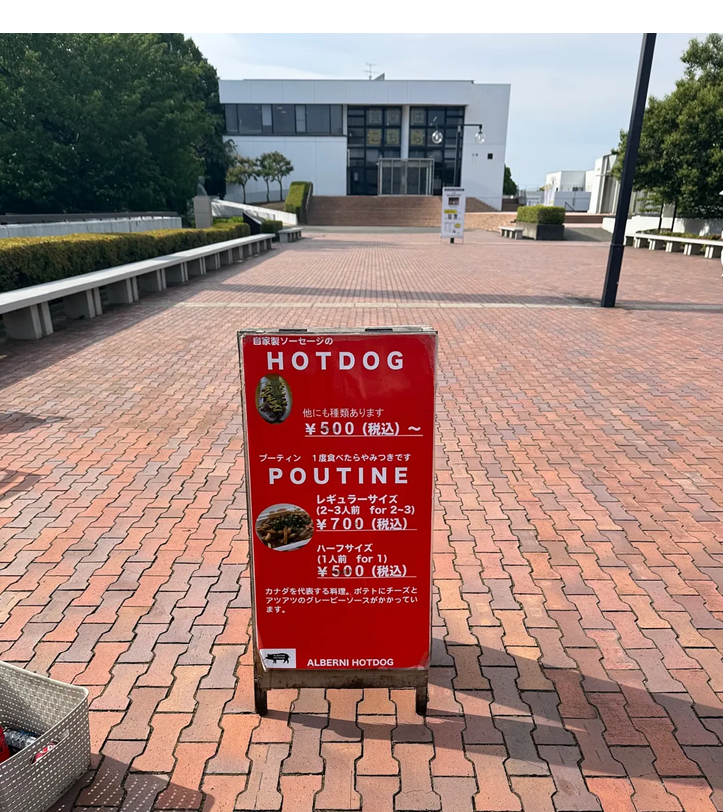
When asked about his impression of Meiji Gakuin students, the owner immediately smiled. He described them as kind, energetic, and wonderful people. After serving students for many years, he has met thousands of young people and watched many of them graduate. Some students become regular customers and stop by every week. These daily interactions are one of the most rewarding parts of his job. For him, the food truck is not only a business but also a place where relationships are built through simple conversations and shared meals.
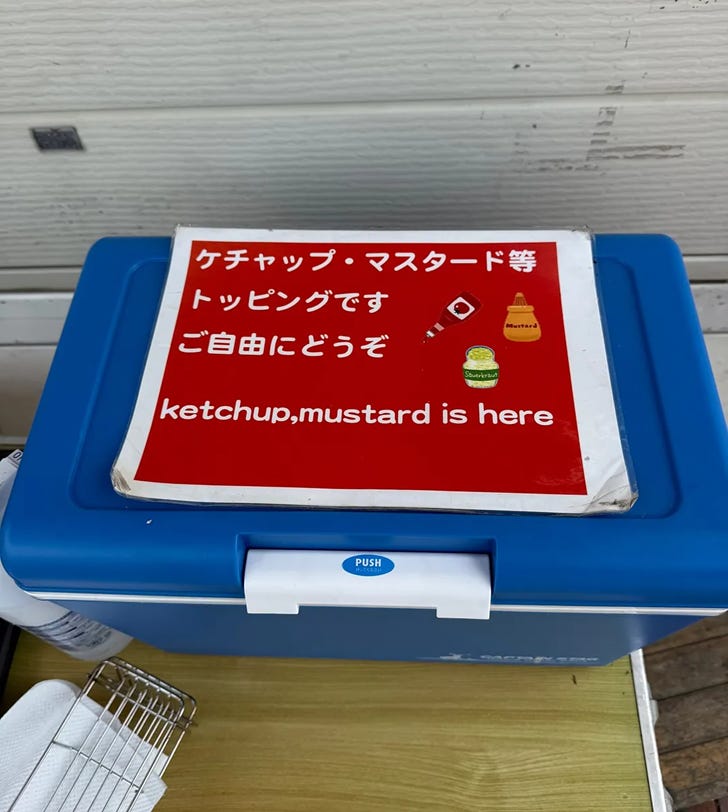
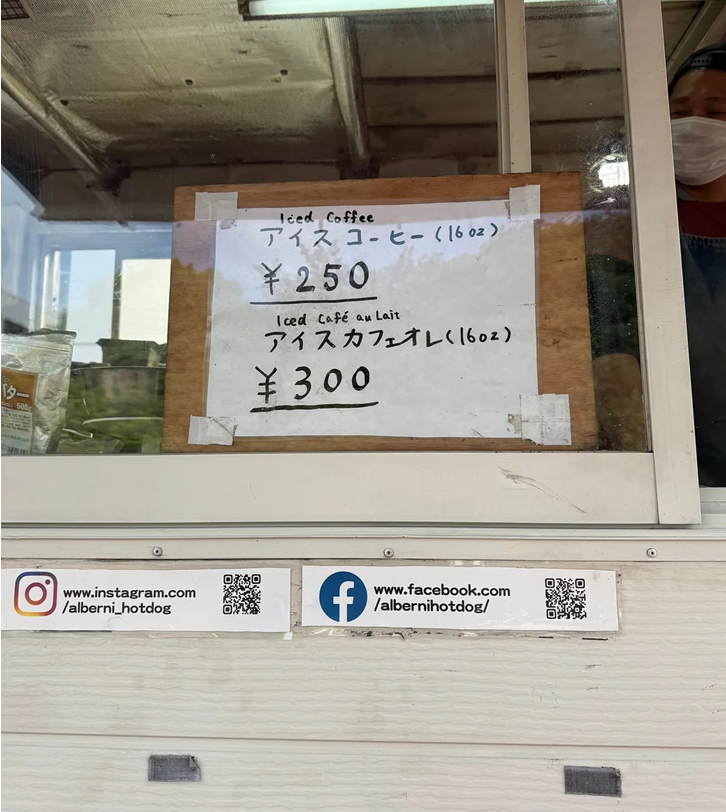
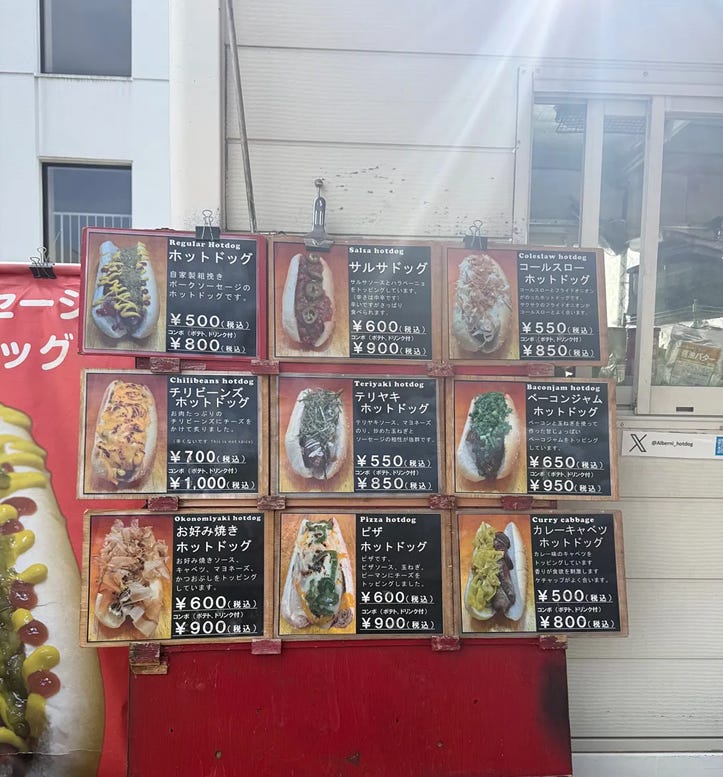
The truck offers a variety of menu items, but the owner’s personal recommendation is the chili beans. It is one of the dishes he is most proud of and a menu item that reflects his experience and creativity. However, among Meiji Gakuin students, pizza is especially popular. During lunch breaks, students frequently line up to buy slices of pizza, making it one of the best-selling items on campus. The popularity of different foods changes depending on the location, but pizza has become a favorite choice among Meiji Gakuin students.
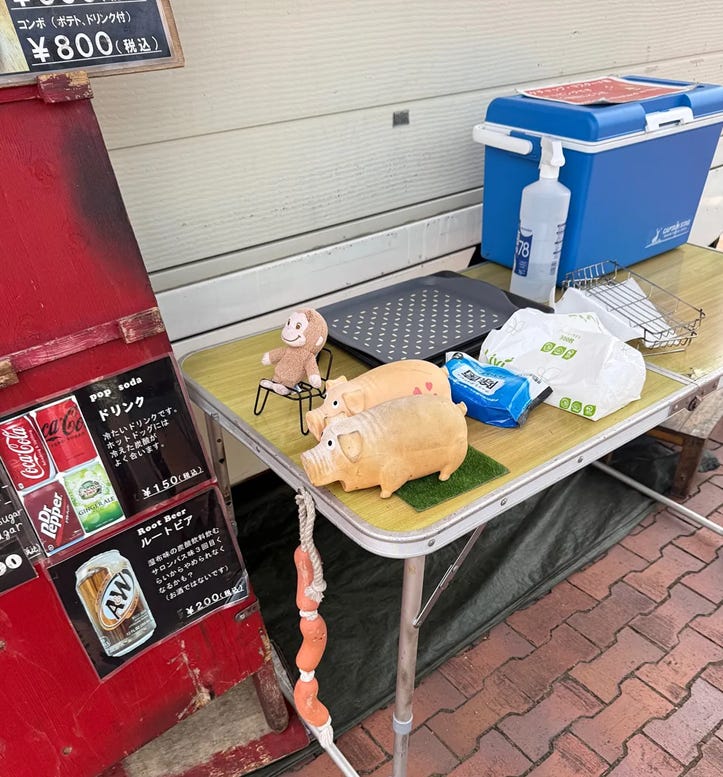
Observing the owner at work reveals that running a food truck requires much more than cooking. Every day involves preparing ingredients, transporting equipment, setting up the truck, serving customers, and cleaning up afterward. It requires flexibility, responsibility, and strong communication skills. The owner must adapt to different locations, weather conditions, and customer needs while maintaining a positive attitude.
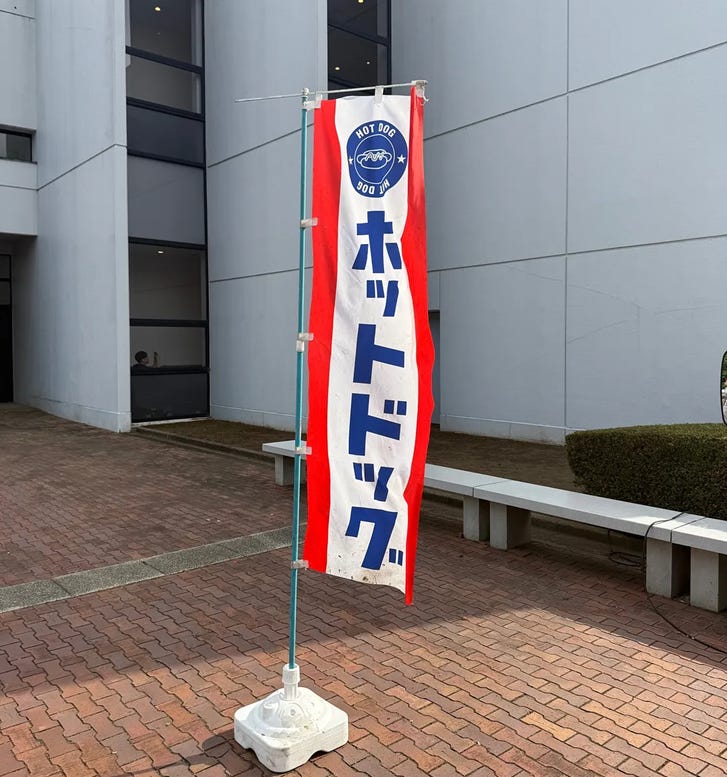
For many students, the food truck is simply a convenient place to buy lunch. However, behind every meal is the story of a hardworking entrepreneur with international experience and nearly a decade of dedication. From working in a hot dog shop in Vancouver to serving food at universities and community events in Japan, the owner has built a career centered on bringing people together through food.
The next time students visit the food truck, they may see more than just a place to eat. They may see the story of a person whose passion, hard work, and commitment have made him an important part of the campus community.
AI generated images
#8
A Multimedia Research Project
roles Nako: The Writer
Suzuha: The Visual Producer (Photo/Video)
Hana: The AI & Media Editor
More Than Just Coffee: The People Behind Komeda’s Comfortable Atmosphere
When people visit a cafe, they usually focus on the coffee, food, and relaxing atmosphere. However, behind every comfortable experience are employees who work hard to provide excellent service. For this project, we interviewed a staff member at Komeda Coffee Asagaya to learn more about her daily work and the role she plays in creating a welcoming environment.
She decided to work at Komeda Coffee after visiting the café as a customer. She was impressed by the quality of the customer service and wanted to become part of the team. This positive experience motivated her to apply for the job and contribute to the same welcoming atmosphere she had enjoyed.


At Komeda Coffee, she shares different responsibilities with other staff members throughout the day. Some employees work in the hall, serving customers and taking orders, while others prepare food and drinks. She explained that employees are trained to perform multiple tasks so that they can support one another when needed. This flexibility helps the cafe operate smoothly, especially during busy hours.


One of the unique strengths of the Asagaya branch is the strong relationship among the staff members. She said that the employees communicate well and work together effectively. Their teamwork allows them to provide better service to customers. She believes that good communication and cooperation directly improve the customer experience and help create the warm atmosphere that Komeda Coffee is known for.
She also shared some of the challenges of the job. Customer care requires constant attention and consideration. She often tries to anticipate customers’ needs before being asked. Although this can be difficult and requires careful observation, it is also one of the most rewarding parts of her work. Seeing satisfied customers and knowing that her efforts made a difference gives her a strong sense of accomplishment.
Through this interview, we learned that working at a cafe involves much more than serving coffee and food. According to her, the job requires teamwork, communication, and a genuine desire to care for customers. Her dedication, along with the efforts of her coworkers, helps create a comfortable space where people can relax, study, and spend time with friends and family. Their work is an important part of what makes Komeda Coffee Asagaya a valuable place in the local community. If you are looking for a welcoming cafe with friendly staff and great teamwork behind the scenes, Komeda Coffee Asagaya is definitely worth a visit.
#9
24kc1046 Miyu Matsuyama
24kc1039 Mizuki Arakawa
24kc1043 Ayana Yanagida
Beyond the challenges of Visual Impairement
<Script>
My name is Shota Ando. My primary focus is on Universal Design and Inclusive Design. I work as a consultant to help companies to involve people with disabilities and elderly people in the design and planning processes of their services and products.
I am the facilitator and advisor. When companies are developing new offerings, I suggest, “It might be interesting to speak with this type of person,” or “Let’s try asking them this,” or “Let’s have them actually test this in this type of environment.” I help coordinate these interactions.
I provide these inclusive design consulting services through my company, “1-Kyu Inc.”
Inclusive design is a design methodology used when companies are creating new products or services. Typically, companies decide what to build based on their own internal assessments of what will sell. However, given our aging society and the increasing number of people with physical limitations, we need to consider what these individuals truly need—or better yet, what they want to use. Inclusive design addresses this by involving people with visual impairments, elderly individuals, wheelchair users, and others from the very initial planning stages. By collaborating with them, we can determine how to create products that a wider range of people will find desirable.
As a consultant, I bridge the gap for companies. Many businesses lack connections with people with disabilities or the elderly, and they often struggle with knowing what questions to ask. I provide them with the network of these individuals and the expertise on how to extract insights. For example, I facilitate interviews and even organize field visits to observe how they live. I essentially act as an advisor, providing the opportunities and the environment to gather these valuable perspectives.
I personally have a visual impairment. Living in this society, I often find that it was built by and for able-bodied people, which creates many inconveniences and challenges for us. While those barriers certainly need to be removed, these very challenges can actually serve as a source of innovation when developing new products and services. When companies discover the specific pain points we face, they can transform those obstacles into new value for their products.
It is incredibly rewarding for me to support this process of turning what was once a hurdle for us into a valuable solution for society.
I don’t necessarily believe that everything needs to be perfectly flat or equal. Rather, I hope for a society where, when someone has the desire to try something or take on a new challenge, they are not hindered by external barriers. Of course, there are aspects where my disability prevents me from doing certain things as easily as others. Often, the reason for this lies in societal barriers. By removing those obstacles, I hope we can create a world where everyone can believe that they, too, have the potential to achieve things.
Inclusive Design Consultant and Facilitator
Shota Ando, founder of 1-Kyu Inc., specializes in Universal Design and Inclusive Design. I help companies involve people with disabilities and older adults in the design and development of products and services. As a facilitator and advisor, I connect businesses with diverse users and guide them on how to gather meaningful insights.
What Inclusive Design Means
Inclusive Design is a methodology that brings people with disabilities, older adults, and other underrepresented users into the development process from the earliest stages. Instead of relying solely on internal assumptions about what will sell, companies collaborate directly with these individuals to create products and services that better meet the needs and desires of a wider range of people.
Bridging Companies and Diverse Users
Many companies have limited access to people with disabilities or older adults and are unsure how to engage with them effectively. I provide both the network and the expertise needed to facilitate interviews, organize field visits, and create opportunities for direct interaction. His role is to help companies uncover valuable perspectives that can inform innovation.
Turning Barriers into Innovation
As a person with visual impairment, he experiences firsthand the challenges of living in environments largely designed for able-bodied people. While removing barriers is important, these challenges can also become sources of innovation. By understanding the difficulties faced by people with disabilities, companies can identify opportunities to develop new products, services, and experiences that create value for society.
Building a Society of Opportunity
His goal is not necessarily to make everything perfectly equal. “Rather, I want to help create a society where people are free to pursue their ambitions without being limited by unnecessary external barriers, said Mr. Ando. By reducing societal obstacles, we can build a world where everyone has the opportunity to participate, contribute, and believe in their own potential.


What is Lisair?
LisAir is a women’s dormitory for Meiji Gakuin students, run by the university’s alumni. The students will share a home and live together with the landlord couple and their son
The name LisAir comes from the French words “Lis” (lily) and “Air” (breeze). Their wish is to share a fragrance that brings pure happiness, subtle yet deeply comforting, much like a lily, carried on the wind to everyone. That is the story behind their name.
https://lis-air.amaretto.jp/owner.php ←click here for more details