Elderly workers
by Anja Londgren, Heaven Gonzalez, Zakria Alhamawi, Miyu Matsuyama, Mao Okamoto
by Anja Londgren, Heaven Gonzalez, Zakria Alhamawi, Miyu Matsuyama, Mao Okamoto
Life After Retirement for Elderly Japanese Workers
For this group project, we interviewed a crossing guard, security guard, and cafe worker who are all older retirees. This is all their second job after working hard, laborious jobs for most of their life.
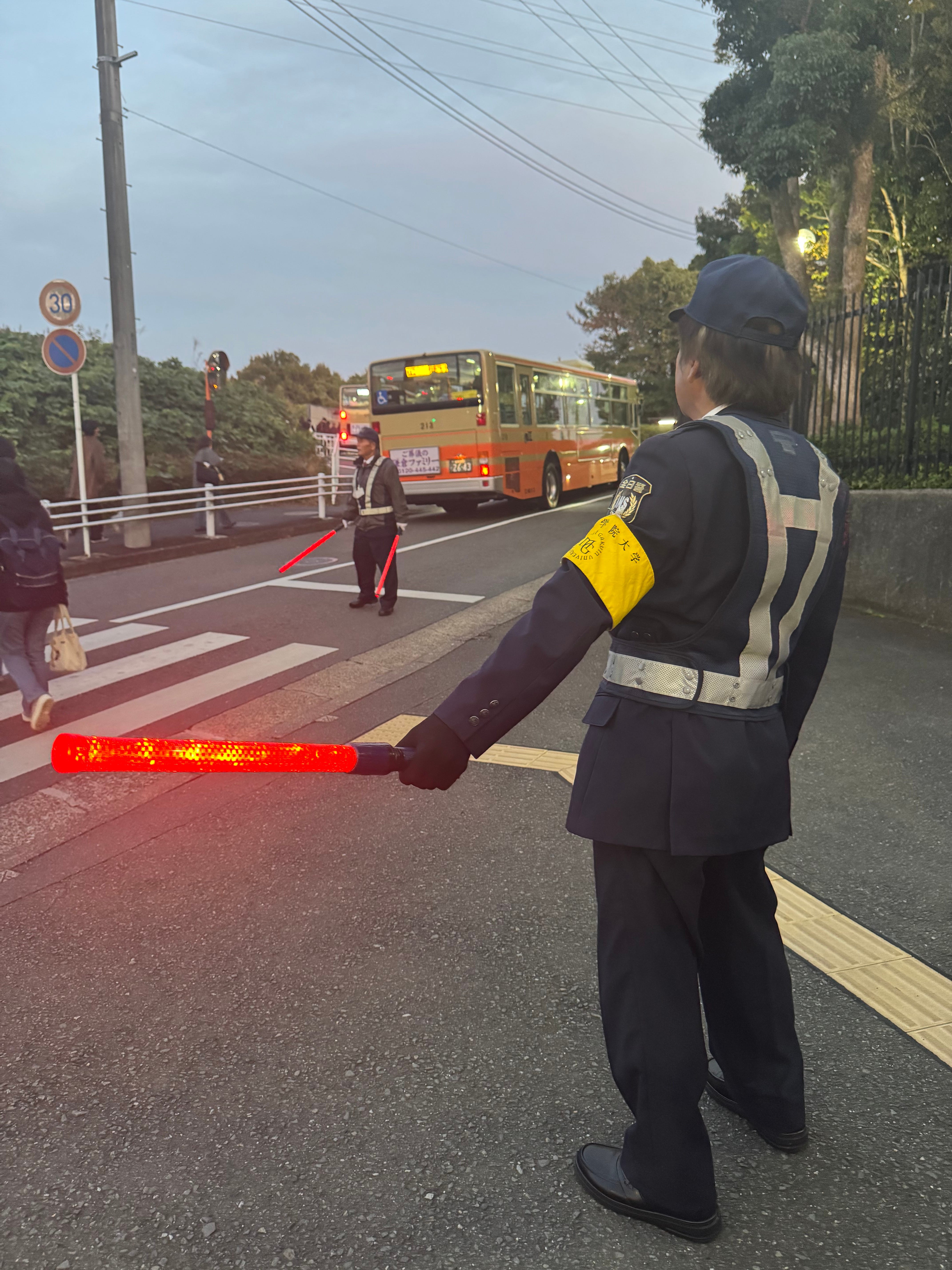
The crossing guards protecting the students safety
1. Crossing Guard (68 years old, Japanese man)
I interviewed a crossing guard at Meijigakuin University who is one of a few crossing guards who are also elderly men working their second job post-retirement. He is a 68 year-old Japanese man who chose this job because it is close to his house and he wants to keep working while maintaining a comfortable life after retirement. It is nearly impossible to live a comfortable life after retirement if you do not work a second job because you still have bills to pay, groceries to buy, and other necessary expenses.
Before retirement, he spent a majority of his life working in CAD design during Japan’s bubble economy era. He worked very long hours because corporate culture was intense and social expectations centered around the workplace. He recalls having to commute one to two hours every day to and from work, then going out to drink nearly every night with colleagues after his long work day. Oftentimes, the nighttime drinking excursions can be an extension of the workplace where you are forced to participate in professional duties rather than relax and have fun.
Now, he is in his second career and the experiences he has now are very different from his life before retirement. He enjoys the better work-life balance and calmer lifestyle that he is able to maintain now that he is not working such an intense job. His work as a crossing guard allows him to go home at a reasonable time, his commute time is much shorter, and he has daily interactions with students and staff that make his day more enjoyable.
While one might walk past him and make assumptions on how he feels about having a menial job, he enjoys what he does and the opportunities it gives him to live the way he wants to. It’s a job that people overlook, but it’s necessary to keep what could be chaotic and hectic very organized and efficient. Hundreds of students line up after every period to get on the bus, and more often than not, we don’t wait in line longer than 20 minutes because of the crossing guards. His story is not an uncommon one amongst elderly Japanese people. Many retirees choose to continue working, not only for financial stability but also for the daily social connections and purpose their job gives them.
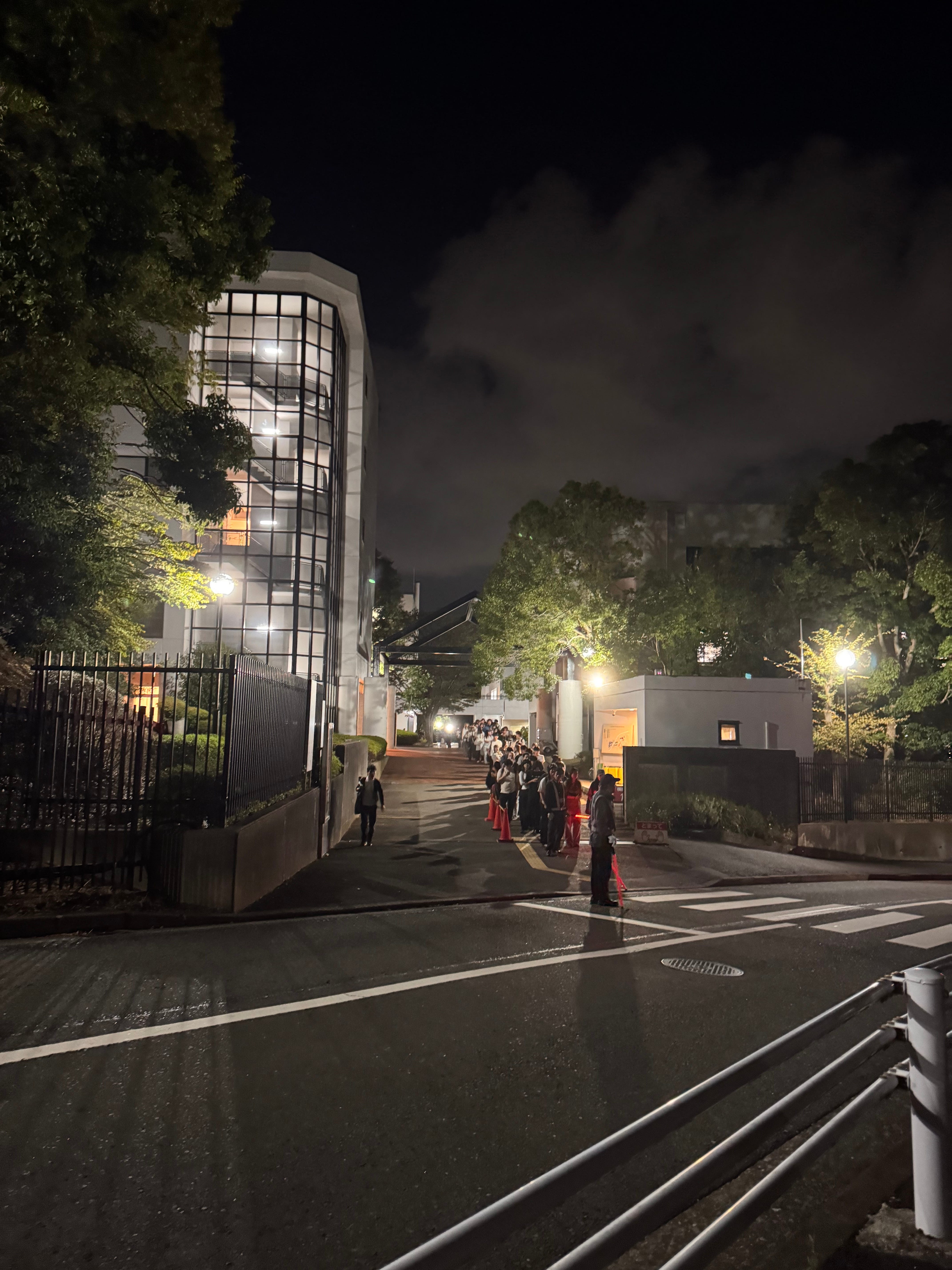
2. Security Guard (58 years old, Japanese man)
At 58 years old, another employee at Meijigakuin University works as a security guard, ensuring the safety of students and keeping order on campus. He began this job after leaving the food industry, where he spent most of his career working in restaurants and at a supermarket’s fish section. He doesn’t hold any special qualifications, so he looks for work that doesn’t require certificates but allows for him to stay active.
Looking back on his years of working in the food industry, he notes that while Japan’s bubble economy brought prosperity to the IT and finance sectors, it did not really benefit the food industry or service workers like himself. He recalls that harassment at work, whether that be power harassment from superiors or sexual harassment in the workplace, was not an uncommon experience. Today, he feels that the work environment in Japan has become more thoughtful and balanced compared to earlier decades. Even though official retirement is upcoming for him, he isn’t ready to stop working. At 60, he has hopes of opening up his own restaurant, fulfilling a long held dream of his. I admire his dedication to working and the passion he still holds for making this dream come true.
Since the pension in Japan is not very large, I thought people might have to keep working after retirement to maintain a comfortable lifestyle. In fact, according to the Nippon Foundation, about 60% of 1,000 young people aged 17 to 19 said they were concerned about what their financial situation will be at age 65. As Japan’s population ages and the birthrate declines, pension payments are expected to decrease. So I think one major reason why NISA has become so popular is that people want to build more passive income for their retirement.
← From the official X account of Meiji Gakuin University
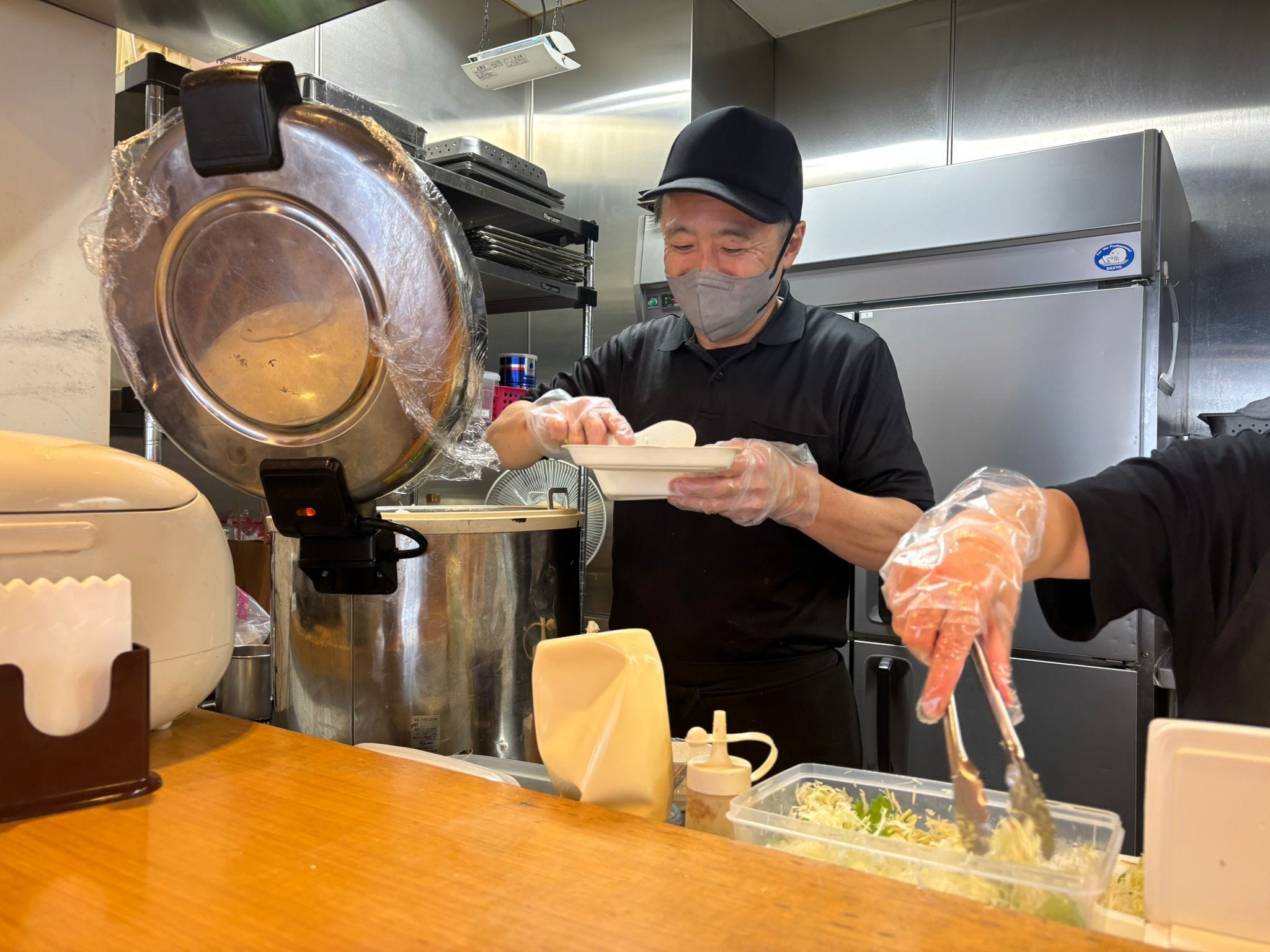


The cafeteria man and a MGU student are enjoying friendly conversation.
The cafeteria man serves his meals with a big smile and lots of love.
He greets hungry student with a warm smile.
Café Staff (54 years old Japanese )
The man I interviewed is 54 years old and has worked in four different jobs throughout his life in a restaurant, an elderly care home, a hotel, and now at Meiji Gakuin University Café, where he prepares food and drinks. When I asked why he chose these kinds of jobs, he said it’s because he enjoys interacting with people. That’s why he has always chosen work that allows him to communicate and connect with others.
He explained that he changed jobs because he wanted to experience new things and face new challenges in life. When I asked why he decided to work at Meiji Gakuin Café, he said he enjoys talking with students and observing how each generation changes every year. He also mentioned that through his job, he has met many foreign students and learned about different countries and cultures. He has been working there for about five years now.
As for his retirement plans, he said he will take a month-long vacation soon and then continue working part-time. For him, work gives meaning to life, and he wants to keep meeting people and staying active for as long as he can.
Elderly Workers in Japan, Turkey, and Syria Comparison.
In Japan, many elderly people keep working even after retirement. It’s not only about money , it’s about having a purpose and feeling part of society. Work gives them meaning in life. Because Japan can feel lonely. Even if you have free time, others are usually busy, and socializing is not a very possible option. That’s why many older people continue working to stay active and connected.
In Turkey, life after 60 is more social and relaxed. People often stop working and spend time with friends in elderly cafés, drinking a lot of tea, playing old games, and talking. In addition, families are close and older people usually live near their children. However, the economy has become difficult, so some have started working again.
In Syria, most elderly people never really retire. They keep helping their families, farming, or running small shops. Life can be tough, but community and family ties are strong.
More importantly, Both Turkey and Syria are mainly Muslim societies, where faith gives life meaning. Many elderly people see their later years as a time to grow closer to God (Allah is the meaning of life for them ). While in Japan, religion plays a smaller role, so people often find meaning through work or social activities instead of through god and worship.